Author: Ellie Stevenson

  • Borley Rectory: the house and its ghosts – part two

    Borley Rectory: the house and its ghosts – part two

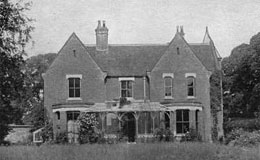
    Borley Rectory (probably in 1929)In part one we talked about the history of the house and some of the things that were found on site.  The excavations were the culmination of many reports of ghostly phenomena. But was Borley really haunted?

    The history of the house can be summarised as follows:

    • 1863: the Reverend Henry Bull moved into the house he’d just had constructed. Reverend Bull had a large family and subsequently had the house extended
    • 1892: Henry Bull died, and his son, Harry Bull, also a vicar, took over the role
    • 1927: Harry Bull died and in 1928 Rev. (Guy) Eric Smith and his wife moved in. They moved out in 1929. Eric Smith’s sister was a medium
    • 1930-1935: the house was occupied by the Rev. Lionel Foyster, a cousin of the Bulls, and his wife Marianne; they left due to Lionel’s ill health
    • 1937-1938: the house was rented by Harry Price, a paranormal researcher, who secured various observers to report on phenomena
    • 1939: the house caught fire and was badly damaged.  By then the owner  was W. H. Gregson
    • 1944: the house was demolished

    So what was reported

    • Henry Bull’s daughters and a number of others reported seeing the ghost of a nun
    • Various people at different times heard servants’ bells ringing; no-one wanted to admit ringing them
    • Stones were thrown, lights were seen or turned on, and a number of people heard unexplained footsteps
    • There were wall writings – these have been photographed
    • The planchette séance incident (a planchette is a device to facilitate automatic writing)

    The truth and the fiction

    With hindsight, we can see that much of the haunting wasn’t ghostly at all. The story of a nun being seen at the rectory was probably initially developed by the Bull daughters for their own amusement. The legend of a nun being walled up alive after an illicit romance is just that, a legend, or maybe taken from the plot of a novel. Borley was a rural community and Andrew Clarke (2003) suggests that at that time, a lot of people would be wandering around Borley on foot. A travelling farm worker dressed in black, with a scarf on her head, might look like a nun, particularly at dusk, and at a distance.

    The sounds of bells are easily explained. The bell wires (the bells had previously been used to summon servants) were laid out in the attic and could have been triggered by mice or birds. One of the Foyster family, Ian, found a string tied to a wire in the rectory courtyard. This suggests the bells had been rung on purpose, for ‘fun’, at least once. Marianne Foyster also mentioned a broken wire hanging down from the ceiling. Such wires would be an excellent opportunity for causing mischief.

    Reverend Harry (Henry) BullThere were a whole host of unexplained phenomena, which could be ghostly, but realistically, were more likely to be down to human interference. Frank Peerless (or Pearless), the Foyster’s lodger, is said to have admitted to being responsible for some of the phenomena.

    Prior to that, when the Smiths were in place, Mabel Smith was cleaning out a cupboard when she found a skull wrapped in paper. While it’s tempting to think it might be the skull of a missing nun, or someone who had an illicit affair and was buried beneath the floor of the house, it’s possible the skull may have been recovered from the garden where bones of the dead used to reappear (see part one). The Smiths were bothered by a number of incidents such as unexpected lights in windows and the ringing of bells and they wanted to contact a psychical researcher. They got in touch with the Daily Mirror who as well as making their own report, arranged for Harry Price to visit.

    Price, who was associated with the rectory for quite a few years, including after the building caught fire, expressed a belief that the happenings were real, but caused by people, rather than ghosts. But he clearly had doubts and couldn’t wait for the Foysters to leave, so he could get a team in and  investigate further.

    The wall writings, from the 1930s, are almost certainly fake, but have attracted a continual stream of interest. They, and the earlier writings on scraps of paper, included Marianne Foyster’s name and requests for help. Was this the nun, asking for peace? There was also confusion over what exactly had happened with the writings as Marianne Foyster said she’d removed them, but later they were photographed. The style of the writing is similar to Foyster’s but she denied being involved. It remains another Borley puzzle.

    The planchette séance is an interesting phenomenon, which happened after the Foysters had left. The house was being studied by several of Price’s volunteer researchers. One of the researchers, Sidney Glanville, recovered a planchette from a storage room, and it was used one night in the Borley library. Two ‘messages’ came out of the reading, one about a nun, Marie Lairre, said to have been murdered by one of the Waldegrave family in the 17th century. There appears to be no evidence that such a figure actually existed (although given that this was the 17th century, that’s hardly surprising). The other message involved ‘a clear prophecy that the Rectory would be burned and under the ruins would be found the bones of a murdered person’ (Sidney Glanville, source below). Eleven months later, on 27 February 1939, the house caught fire and fell into disrepair. At the time of the fire the house was owned by a W. H. Gregson.

    There are numerous other strange incidents, such as lights, smells and various sounds. But old buildings creak, and Henry Bull’s extension may have added to the effects. When people were outside in the courtyard, for example, the sounds were magnified inside, and sounded as if they came from within.

    It seems likely that environmental factors combined with a few mischievous people were responsible for most of the so-called hauntings. But even now, some questions remain. Were so many people really so gullible? The Smiths, for example, stayed a very short time, and unknown to them, the church had tried to fill the position unsuccessfully several times over before the Smiths took it. Smith himself had a very bad feeling about the place, and when the Foysters took over, the incidents increased, although perhaps because of their suggestible natures. Also, several people died in the Blue Room, but then, it was a bedroom.

    BorleyChurchWe’ll probably never know what happened at Borley, but there’s a vast array of reading material to keep even the most enthusiastic ghost hunter going for decades. And some say the ghosts of Borley still lurk in the churchyard – but I don’t believe it…

    Note: Borley Rectory no longer exists. Anyone visiting the local area should respect the peace and privacy of residents.

    Article written by Ellie Stevenson, author.

    This article is copyrighted material. Brief extracts including a link to this site can be quoted but the article must not be reproduced in full anywhere without the author’s written permission.

    Sources (websites)

    Images – sources

    Further Information

  • Borley Rectory: the house and its ghosts – part one

    Borley Rectory: the house and its ghosts – part one

    Borley Rectory 1892Houses are a current fascination. Perhaps because my next novel includes a house – but is it haunted? Borley Rectory, on the other hand, wasn’t just haunted, but supposedly England’s most haunted house. It  certainly is England’s most complex haunting.

    Looking at the picture of the house above, the place has an almost ethereal quality. Borley Rectory was anything but. Built by the Reverend Henry Bull in 1863, the building itself was large, red brick and gothic Victorian. It was decidedly striking – from the outside. Inside, the house was a different story. The floors were stone or heavy wood, the doors were substantial and also heavy, and some of the windows were iron-barred. There was no gas or electric lighting, occupants used oil lamps and candles for light, and the water supply came from a well.

    While the house lacked charm, it did have space, being three storeys high with about 20 rooms.  It was on the same site (more or less) as a former building, Herringham Rectory. Herringham Rectory, from what we know, seems to have been rather attractive, but wouldn’t have had sufficient space for the social engagements the Bulls enjoyed, and the size of their family (14 children of whom 12 survived). So Reverend Bull had his own home constructed, and later, even had it extended.

    Andrew Clarke, paints an interesting picture, when he talks about the presence of two previous buildings, Herringham Rectory  and an older building, maybe also a rectory, and mentioned in several ancient documents. This building is likely to have been from the 17th century or maybe the mid to late 16th century. Clarke describes it as a ‘typical three-bay oak-framed building.’  He suggests the three buildings would have used the same driveway and also shared a stable and coach house. But why is the oldest building significant?

    Borley Rectory sometime before demolition (1939-1944)By the 1950s, Borley Rectory had vanished from view, all that remained were cellars, foundations and plenty of rubble. In 1939, the house had caught fire and was badly damaged, it was later demolished (in 1944). But a history of ghosts, suggestions of nuns and messages on walls had finally led to cellar excavations, the first in the thirties when the house was still standing, and later in the fifties, when again nothing of significance was found. But in between, in 1943, was a different story, when ghost hunter Price was one of a team exploring the site. His motley crew included a pathologist, the local vicar and the vicar’s gardener who did the digging. They were looking for death but instead found bottles and broken knives. Then they moved on, and three feet down, and discovered a jawbone and part of a skull.

    We can only speculate, from a modern perspective, how the  gardener, Jackson, a former farm labourer insisted the jawbone belonged to a pig, while Bailey, the pathologist instead reported that the bone was human. The vicar, Henning, wanted the remains to be buried in the churchyard, but the locals protested  and the bones were hastily buried at Liston. Oh, for today’s forensic specialists!

    The bones and skull raise several questions and not just whether they were animal or human. Also significant: how did they get there, and were they anything to do with the hauntings? Possible explanations include:

    • the bones were animal : detritus left from a former building (probably the first)
    • the bones were either animal and human but planted/exchanged by Harry Price to support his theories. Price was a sceptic turned believer, so maybe the bones were part of his plan?
    • the bones were human:  the remains of a nun, probably not the one of the legend, but maybe French and possibly murdered in the 17th century (highly unlikely, although it’s interesting that when the dig was extended the following day some old French pendants were found nearby)
    • the  remains of someone associated with Borley whose death might not have been totally innocent (was Katie Boreham buried in the churchyard?)
    • the bones belonged to a plague victim of the 17th century, although why he or she might be lying in the cellar is anyone’s guess

    An interesting point with regard to the last, is that apparently part of the rectory’s garden was a burial site for plague victims, and occasionally bones would reappear  (A. Clarke, 2003).

    Still one question remains unanswered. What did happen at Borley Rectory and how much of the story is attributable to ghosts? Find out in part two.

    Note: Borley Rectory no longer exists. Anyone visiting the local area should respect the peace and privacy of residents.

    Article written by Ellie Stevenson, author.

    This article is copyrighted material. Brief extracts including a link to this site can be quoted but the article must not be reproduced in full anywhere without the author’s written permission.

    Sources (websites)

    Sources – Images

    Further Information

  • Harvard House: no ghosts but plenty of history

    Harvard House: no ghosts but plenty of history

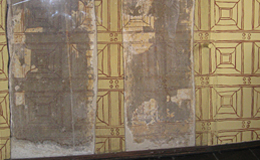
    Harvard House Stratford-upon-Avon. Remains of a wall painting on 2 plaster panels, probably from the late 16th century and currently undergoing conservation. Adjacent walls have been painted to show the original appearance.‘the college agreed upon formerly to be built at Cambridge shall be called Harvard College’  (1639)

    On rare occasions, both locals and visitors to Stratford-upon-Avon, UK, have the chance of a glimpse at a slice of history. The history in question is Harvard House and although to my knowledge there aren’t any ghosts, there are plenty of stories. The visit starts outside the property.

    The house was rebuilt in 1596 (probably because of the local fires of 1594 and 1595) by Thomas Rogers, whose initials, along with those of his wife, can be seen on the elaborate facade.Harvard House Stratford-upon-Avon

    Rogers, who was a wealthy businessman, also owned numbers 27-28 High Street, and it’s supposed but not proved, that the original staircase for Harvard House, located in a turret, could have provided access to the other house too. After Harvard House was sold in the mid-seventeenth century, the staircase was rebuilt inside the house, and subsequently moved to its present location. The external staircase had been removed.

    Rogers had a daughter by the name of Katherine, and it’s through her that the house gained its name and became well-known. She married a man called Robert Harvard of Southwark, London, and, because of Southwark’s theatrical connections, it’s possible that Harvard knew Will Shakespeare and maybe that’s how Harvard met Katherine. Alternatively, however, Harvard and Rogers were both butchers, so maybe a meeting came through trade – or through Thomas Rogers’ connections on the local council.

    Harvard House Stratford-upon-Avon: earlier construction materialsKatherine’s married life as Harvard’s second wife wasn’t easy. They lived in London but in 1625 an outbreak of plague killed her husband Robert and four of their children, leaving Katherine alone with just two sons, one being John (baptised 1607). Robert left £600 to the two boys and provision for his widow, who married again (twice), but her second husband died within just five months. He too, left her well provided for. The estate remaining on her subsequent death in the 1630s, allowed John to be a generous benefactor.

    John Harvard was focused on the ministry and after extensive study at Cambridge University and the death of his mother, he and his wife, not long married, set sail for New England. He made his home at a place called Charlestown, working with the pastor and teaching the Scripture. But success was brief as he died shortly afterwards, in 1638, aged just thirty-one.

    His spoken bequest left half of his estate and all of his library to a proposed new college at Cambridge, Massachusetts. A plan for the college was already in place but John’s bequest made the plan more feasible.

    Harvard House Stratford-upon-Avon: staircaseToday, Harvard House is managed by the Shakespeare Birthplace Trust, but its current preservation is thanks to the work of  popular novelist Marie Corelli who purchased the property in the 1900s ‘to save it from ruin’ (Teresa Ransom, p146). She brought it to the attention of some American contacts who generously funded its restoration, Corelli having already purchased the property. The restoration took four years and the opening ceremony was held in Stratford-upon-Avon on 6 October 1909.

    Harvard House Stratford-upon-AvonMiss Corelli has exercised her own taste and simply removed all modernities, and allowed the house to show itself as it is and as it was in the days when John Harvard saw it as a child.’  Whitelaw Reid, American ambassador (Teresa Ransom, p 168)

    Sources

    Harvard House/John Harvard and Harvard University [leaflet, n.d.]

    Ransom, T. The Mysterious Miss Marie Corelli, Sutton Publishing, 1999.

  • A Force for Good: Stuart Wilde

    A Force for Good: Stuart Wilde

    CornflowersEarlier this week, I was scrolling down a news site looking for info. Instead I found something completely different. Stuart Wilde had died. Now, he died in May and this is June so obviously I was a bit out of date. But that didn’t lessen the impact at all. I was gutted.

    Wilde, for those who don’t know him, was one of the gurus of the self-help movement, and ranks alongside other well-known names such as Wayne Dyer, Denise Linn and Louise Hay. What I liked best about Stuart Wilde’s work was his humorous style, his down-to-earth attitude, and how he could take challenging concepts and make them practical, almost a matter of common sense.  For me, Stuart’s words were inspirational, but grounded in the day-to-day. That’s what made him a breath of fresh air.

    The Force by Stuart WildeOne of his books, The Force, talks about detachment.

    Wilde explains that while there’s a place for helping others, such as giving to charity, the main way to make an impact is to raise our energy, staying balanced  and non-judgemental and allowing others to be themselves. Focusing on improving ourselves, Stuart says, enables our energy to oscillate faster, and us to express more of the lifeforce. Stuart explains that all things have a vibrational energy and what distinguishes one from another is the speed at which that entity oscillates. As human beings we have a great potential to express the lifeforce,  but negative behaviour holds us back. This is why discipline is so important.

    When we are balanced, calm and detached, and focused on improving ourselves, the things we need are pulled towards us. We learn to accept ourselves and others, know we’re where we’re meant to be, and don’t judge.

    None of this is easy, naturally. Stuart advocates four disciplines: physical, nutritional, emotional and balance, the latter being about not getting drawn into the world’s problems. Getting involved for the wrong reasons drags us down and doesn’t provide the right kind of help.  Yes, we can send our charity donation, and that’s valuable, but to raise our  own energy is the best practice, because that helps raise the world’s energy and provides a lift to those around us.

    Silent Power by Stuart WildeThe initiate’s path is a difficult one.  Wilde explains that our spiritual goal is to experience life, and to rise above the things that challenge us. Pain and suffering are not part of the universal plan: they exist because the vibrational field of the earth plane is very dense. By concentrating our energy through discipline and balance, we begin to raise ourselves out of suffering, and express more of the lifeforce. Our lives improve. But of course, there’s a catch.

    To progress spiritually,  we have to face our inner self, with all its fears, illusions and negativities. That isn’t easy. But by gradually coming to know who we are, both the good and the not so good, and accepting our fears and vulnerability, we’re able to go beyond these things.

    As Wilde himself said:

    Affirmations by Stuart Wilde‘Your goal, therefore, is to concentrate on your strengths, believing in yourself, loving yourself, not infringing on others, and going beyond those things that you find hardest to deal with. Accepting that goal is half the battle; taking responsibility for yourself is the other half.’ (The Force, p69)

    Source & Further Information

    Wilde, Stuart. The Force, Hay House, 1984

    Stuart Wilde’s website

    Other suggested books of Stuart’s

    Affirmations, Hay House, New ed. 2004

    Silent Power, Hay House, 1996

  • Holy, but Haunted

    Holy, but Haunted

    york-minsterSome years ago, I wrote a short story about the ghost of novelist Charlotte Brontë. You can read a sample of the story here. Charlotte Brontë, her work and her life  have long been a source of interest to many, and some have sensed her spirit lives on. In her local church. More about that aspect later.

    Charlotte Brontë was a clergyman’s daughter and to ‘find’ her in a church isn’t surprising. Even if it isn’t her actual church but only the replacement which stands on the spot. Churches have long been a source of ghosts, imagined or real (?), the air being thick with history and strife, many lives, overlaid with time. Here are just a few examples.

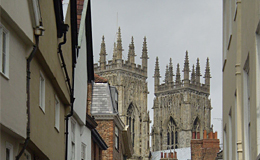
    York Minster (see above)

    As churches go, York Minster is somewhat special. It too has its share of ghostly history, including a very poignant story. A man, B.L., was visiting the Minster and talking to a friend and his two daughters. Another man, wearing a naval uniform, walked towards them. One of the daughters went very pale. The navy man then whispered to the woman: ‘There is a future state,’ he said, before vanishing down the aisle of the Minster.  B.L. tried to find where he’d gone, without success, but the daughter then made everything clear. The man, it turned out, was her brother, who had just died at sea. They’d made an agreement, whoever died first would go to the other and show that life after death exists. And that’s what happened.

    News came which confirmed her story, her brother had died on the very same day, at the same time, that she’d seen his presence, standing there in the north aisle.

    cleeve-hill-roadCleeve Hill (Cheltenham)

    Sometimes, just to be near to a church is enough for a haunting.

    Cleeve Hill is the highest point in Gloucestershire and the Cotwolds, being a little over 1000 feet above sea level. A teacher, driving down from the Hill, saw a funeral procession making its way across a field, close to the road. She noticed the cortege was moving slowly and was rather smart, but couldn’t see why it was crossing the field, instead of using the easier road. She also saw men accompanying the hearse, dressed in black, but slightly wobbly, and laughing a lot. She didn’t know this was a Victorian funeral.

    In Victorian times, a cortege might take a different route to the usual one, to keep spirits away from the living. And as for the men, attendants might have a little gin, and sometimes too much, and so become tipsy.

    The woman was intrigued by the unusual sight, and turned her car round, wanting to see more. But she was too late, the procession had gone, and far too quickly in such a short time… unless of course she’d seen a ghost. St Peter’s Church overlooks the site, perhaps the funeral had come from there. The teacher had unpleasant dreams of Victorian faces for months to come.

    St Andrew’s, Langenhoe (Colchester)

    This church was demolished in 1962 but was once one of the most haunted in Essex. The vicar, Ernest Merryweather, appointed to the church in 1937, always kept a diary, and soon used it to record ghosts.  The church was plagued with many incidents, including one where labourers heard the sound of chanting, sung in French, in an empty church. The Reverend also saw a woman, the same woman, on two occasions, but two years apart (1949 and 1951). The first time, she vanished into a place where a doorway had been, through an internal tower wall. Merryweather hadn’t known the door existed. The second time she vanished through St George’s statue, which was placed in front of what had once been the door.

    A year later, Merryweather was in the middle of a service, when he spotted a woman who suddenly vanished – the woman looked sad, and might have been someone different from before. Weeks later,  he heard a noise and thought from the sound that the tower was collapsing. It wasn’t. There were other things too. These included the church door slamming, a man’s footsteps, a woman exclaiming ‘Ow!’ (twice) and a hideous smell.

    The church had not had an easy history. It was struck by an earthquake in 1884, and this had damaged the building badly, although even before,  the tower was said to be in a vulnerable condition, and had been compared to the leaning tower of Pisa. After the earthquake, the church was rebuilt, but it didn’t survive another century. After Merryweather left in 1959, the church was no longer used for prayers – apparently because it was too dangerous. But dangerous why – because of its structure – or because of the ghosts inside the building?

    new-bronte-church-haworthAnd finally, back to Charlotte Brontë. George Hauton of the Brontë Society is on record (see details of YouTube video listed below) as sensing Charlotte’s spirit in her old church in Haworth. Or rather, in the church that replaced hers in the late nineteenth century. It seems that churches come and go – but the ghosts live on…

    Sources

    • Ackroyd, P The English Ghost, Vintage, 2011
    • Barham, A Lost Parish Churches of Essex, Ian Henry Publications, 1999
    • Mitchell, J V Ghosts of an Ancient City, Cerialis Press, 1974
    • White, D Haunted Cheltenham, History Press, 2010
    • YouTube video – Charlotte Brontë 1 of 2: Ghosts & Lost Photos

    Sources of Images

  • The Emotional Cost of Writing a Novel (OR, why we don’t always follow our dream)

    The Emotional Cost of Writing a Novel (OR, why we don’t always follow our dream)

    Image by © Royalty-Free/CorbisEveryone’s got a novel in them (so they say).

    Some people even start to write it. Maybe that’s you.

    But so many writers never finish, go on to the end. What makes you stop?

    There are any number of excellent reasons.

      • You ran out of words
      • Your wife/husband has broken a leg, so you’ve got to get a job
      • You’ve already got a full-time job and it takes up your life
      • The kids are playing up
      • You have kids
      • Somebody said your novel was rubbish
      • etc, etc

    Just a few dozen reasons why you’ve stopped, and each one of that list could be true. Some probably are. So that’s why you’ve halted in the middle of the thing. Right?

    Wrong.

    The real reason you’ve stopped is FEAR.

    Somebody didn’t like your work – or maybe you thought they didn’t like it. Maybe they won’t like you, either, maybe their view of you will have changed. It could be true.

    But the worst critic isn’t out there – s/he’s in your head, and will always be. Writing a novel fills you with doubt: your book’s no good, maybe you’re no good, maybe you weren’t meant to be a writer, not like all those ‘proper’ writers.

    Image by © Royalty-Free/Corbis

    But notice, I said, writing a novel, not writing a book.

    Writing any sort of book, or an article even, can cause the sorts of doubts I’ve mentioned. Doubting your ability to do the job, to put words on paper, to undertake research and to get the job done. But a novel brings an extra challenge.

    It’s about your writing, and about how you’re seen, but it’s also about how you think and feel. When you write, especially fiction, long fiction, which gives your subconscious time to work, your inner critic and all sorts of demons show up to play. Showing you who you really are.

    All sorts of things rise to the surface, to be dealt with, transformed, things you never knew you felt. Which can be a very uncomfortable process. No wonder we never finish that novel. Do we want to face who we are? Of course we don’t. But it’s not all bad.

    Some writers, the ones who make it, revel in the process: might try their shadows out on the page, take those voices and channel that fear, all the apprehension, into their work. The subconscious mind is a vast resource of rich material waiting to be used. It can make you feel a little unsteady, but used properly, you never need fear writer’s block, and your true voice will emerge from the darkness, leaner and honed. And as for the demons, the chances are they’ll fade with time, as they rise to the surface, are changed on the page.

    Transforming you, and creating a marvellous work of fiction. It’s not easy.

    But then, remember, if you wanted easy, you shouldn’t be trying to write a novel.