Author: Ellie Stevenson

  • The Floozy in the Park: history, hats and small islands

    The Floozy in the Park: history, hats and small islands

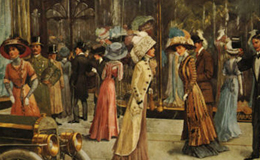
    The Floozy in the Park by Ellie StevensonAt last! My third novel (ebook version) is finally available.

    You can find it on Amazon.

    But what’s it about, you ask? Oh, all the usual things, mystery, history and the occasional ghost. We also have an unsolved murder.

    But rather than tell you all about it, read my interview with Jane Davis (author) on her blog.

    And if you have any questions, please get in touch below.

    Obea (Sark)

  • My Counterfeit Self: an interview with Jane Davis on her latest novel

    My Counterfeit Self: an interview with Jane Davis on her latest novel

    Today, I’d like to welcome Jane Davis. Jane Davis is the author of seven novels. Her debut, Half-truths and White Lies, won the Daily Mail First Novel Award and was described by Joanne Harris as ‘A story of secrets, lies, grief and, ultimately, redemption, charmingly handled by this very promising new writer.’

    Six further novels have earned her a loyal fan base and widespread praise. Her 2016 novel, An Unknown Woman won Writing Magazine’s Self-Published Book of the Year Award. Her favourite description of fiction is ‘made-up truth’.

    Her latest book, My Counterfeit Selfis launched tomorrow (£2.99/$3.99) but get it today at a special pre-order price of £99p/$99c!

    Completely gripping, excellently written and so skilfully put together, I can’t recommend My Counterfeit Self highly enough. Isabel Wolff, author of Ghostwritten.

    For more on the novel and links to her work, please see the end of this post.

    Now, Jane answers some questions.

    What’s your writing style and how do you differentiate your writing from other fellow writers?
    I love this question. It gives the impression that the writing arrives fully formed, when in fact the version the reader sees is an illusion.

    I have only three rules. Whatever my subject-matter, the end-product must be honest, credible and authentic. The hallmarks of my books are multiple points of view and non-linear timelines. I’m excited by cause and effect and unconventionality in all its forms. I like to write about big subjects and give my characters almost impossible moral dilemmas.

    Which of your personal qualities lend themselves to writing?
    I come from a large family where the rule was that it was rude to interrupt, so I guess I’ve become a listener and a keen observer. As someone who never has the right words to say at the right time and who plays conversations over and over in her mind (sometime months after they take place), it’s deeply satisfying to be able to put words into characters’ mouths.

    How do you go about writing scenes which you know will be particularly challenging?
    I’m sure every book or screenplay contains a scene that the author has approached with dread. I know I do! I remember reading that for Anthony McCarten, who wrote the script of The Theory of Everything, it was the one in which Stephen and Jane Hawking acknowledged that their marriage had come to an end. Since Stephen could say very little, he didn’t think it was fair to allow Jane to use words as weapons. McCarten spoke about the need to convey great emotion in very few words. That’s really my first rule of thumb: keep it simple.

    Let me be totally upfront: I hate writing sex scenes. There are so many holes you can fall down. This article explains just some of them. And if a writer as experienced as Ben Okri can win the bad sex in fiction award, then what chance do I have? But An Unchoreographed Life tells the story of a ballerina who turns to prostitution when she becomes a single mother, so I do like to set myself challenges.

    In the case of These Fragile Things, I chose to write about near-death experience and religious visions. My sister’s advice was that no one but Graham Greene should attempt to write about religion, but it was the book I didn’t seem to be able to avoid writing. It was part of my DNA. My grandfather’s conversion to the Catholic faith shaped my father’s childhood and my own. It was important to me to tackle everything with sensitivity and I chose to have each character representing a distinct point of view, and each believing absolutely in his or her stand-point.

    Often, I have to step outside my own experience. I hope that by the time the need arises, I will know my character well enough that he or she can show me the way. In A Funeral for an Owl, I had my character Shamayal, a fourteen-year-old mixed race boy, face the gang members he’s desperately been trying to avoid. To find out how well I did writing my first fight scene, I had it analysed.

    Your novels are all very different – which readers like, but publishers are rather dubious about. Have you ever been asked to write something ‘similar’ to your award-winning debut?
    Readers often write to me wanting to know what happens next. They seem particularly interested in my secondary characters. With These Fragile Things, they fell in love with Miranda, my main character’s school-friend who is expelled for challenging her head mistress. With An Unchoreographed Life, readers already want to know more about Jean-Francois, one of Alison’s former dance partners. My philosophy is to ‘arrive late, get out early’. If I don’t leave the reader wanting more, I haven’t done my job.

    What’s the story behind your latest release?
    It’s the story of a radical poet and political activist called Lucy Forrester, who’s a cross between Edith Sitwell and Vivienne Westwood. Having been anti-establishment all of her life, she’s horrified to find that she’s been featured on the Queen’s New Year’s Honours list. To be honest, the idea of writing about the life of a poet came directly from reader reviews. Several comments that my prose was like poetry. I had no idea if I could actually write poetry but this gave me confidence that I might be able to convince readers that I could see the world as a poet does.

    How do you manage time within a novel that spans sixty years?Jane Davis author
    When I was writing I Stopped Time, I set up timelines for the twentieth century. I added everything from news stories to the books people were reading to the weather. Now, whenever I write a book, I grab the data from the decades it covers and slot my tailored research into place. For My Counterfeit Self, that included details from biographies of poets, literary critics, even a dress designer. Then, because I like cause and effect to show throughout the book, I tend to deconstruct the timeline. Memories don’t arrive in chronological order. They might show up like photographs or postcards, or sometimes even like unwelcome guests. This way, the reader builds a gradual picture of who the angry old lady we meet in the first chapter is, and what made her that way. The story comes together like a mosaic.

    You confess to loving biographies. How much has this influenced your fiction?
    The novel is such an ideal medium for ‘big subjects’ because it’s the only narrative form that transports the reader directly inside characters’ heads. By exploring an issue from the standpoint of one or two individuals, giving it context, providing motive, showing cause and effect, we humanise it. Biography also does that, but a biographer has a responsibility to his subjects in a way that a novelist doesn’t. I think it’s fair to say that you can be freer with the truth in fiction. At the same time, I want my fiction to feel real. I want readers to believe that Lucy Forrester exists!

    In the book, you talk about success coming at a price, as if another kind of bargain has been struck. Is this a reflection of how you feel about your experience of winning the Daily Mail First Novel Award?
    Obviously, it’s unavoidable for a writer to draw on their own experience. I received several reviews that suggested Half-truths and White Lies didn’t deserve to win, that the result was a fix, or that I must have been related to the judges. I wanted to say to those people, ‘I didn’t enter with any expectation of winning.’ You see, I entered out of sheer frustration. I had an agent but my manuscript had been sitting in her in-tray for six months.

    While I was writing My Counterfeit Self, I saw the reaction to Sarah Howes’ win of the TS Eliot Award for her debut collection, Loop of Jade. Even at the awards ceremony, a journalist overheard the comment, “I wonder how long it will be before everyone begins to hate her.” As it turned out, the answer was ‘Not Long’. Private Eye questioned the judging, asking if the award was given “for extra-poetic reasons?” Was it because she was a “young woman with a dual Anglo-Chinese heritage” and could be seen as “a more presentable ambassador for poetry than the distinguished grumpy old men she saw off”.

    There’s always a sense of giving with one hand and taking away with the other, ignoring the fact that at the centre of the controversy is someone vulnerable and real.

    My Counterfeit Self is an intriguing title. What does it mean to you?
    Lucy’s parents behave appallingly and in such a way that she is freed from any feeling of obligation to live up to their expectations. She moves out of the family home and decamps to bohemian Soho. In distancing herself from her parents she adopts a new personality that she hides behind. Although she insists that she lays herself bare in her poetry, it’s keeping secrets from those who love her most that is her undoing.

    My Counterfeit Self: from the award-winning author of Half-truths and White Lies, an emotional story of hidden identities, complicated passions and tangled truths.

    MORE ON MY COUNTERFEIT SELF

    A compelling portrayal of the bohemian life of an activist poet, the men she loves, and the issues she fights for. Eleanor Steele

    A rose garden. A woman with white hair. An embossed envelope from the palace.

    Lucy Forrester, for services to literature, you are nominated for a New Year’s Honour.

    Her hands shake. But it’s not excitement. It’s rage.

    For five decades, she’s performed angry poems, attacked government policy on everything from Suez to Trident, chained herself to embassy railings, marched, chanted and held placards high.

    Lucy knows who she is. Rebel, activist, word-wielder, thorn in the side of the establishment. Not a national bloody treasure.

    Whatever this is – a parting gesture, a final act of revenge, or the cruellest of jokes – it can only be the work of one man. Dominic Marchmont, outspoken literary critic and her on/off lover of fifty years, whose funeral begins in under an hour.

    Perhaps, suggests husband Ralph, the invitation isn’t the insult it seems? What if Dominic – the man they both loved – has left her an opportunity?

    ABOUT JANE
    Jane lives with her Formula 1 obsessed, beer-brewing partner, surrounded by growing piles of paperbacks, CDs and general chaos. When she is not writing, you may spot Jane disappearing up the side of a mountain with a camera in hand.

    START HERE

    Sign up to Jane’s newsletter for a free copy of I Stopped Time.

  • The Forgotten

    The Forgotten

    SS Atlantic disaster (Currier and Ives Lithographs)When I wrote my first novel, Ship of Haunts, the focus was on child migration, ghosts and Titanic. Titanic is well-known for being a major maritime disaster. But there have been many other tragedies, also with significant loss of life, and in Ship of Haunts, as well as Carrin, whose ghost haunts Titanic, we meet someone from the Empress of Ireland and a man called Aaron who was drowned on a ship called the SS Atlantic. Aaron gets bored staying by his ship under the sea, after it sank and wanders off and finds Titanic. Aaron and Carrin become ghost-friends, bound together by their shared tragedy and current home under the ocean.

    I recently did a talk on the Atlantic and its sad history, because I felt that it’s important we remember all shipwrecks, not just the ones which are most obvious. Here, below, is a summarised version of that talk.

    The Forgotten.

    What makes a ship sink? When people talk about Titanic, and how she sank, they cite many things such as Captain Smith’s failure to navigate the iceberg – he wasn’t even on deck at the time, but instead eating his supper inside. There are numerous other things they cite, such as the repairs to Olympic, a sister ship, which delayed the departure of Titanic – had it not been for this, Titanic might never have hit that iceberg. And the list goes on.

    But what if no-one remembered Titanic? All those people (1,500) tragically dead; it’s unimaginable, isn’t it?

    The Atlantic is a ship very few remember, despite the enormous loss of life. At the time it was a terrible tragedy. It should be remembered.

    ‘The world’s worst single vessel maritime disaster, before Titanic in 1912.’

    The wreck of the SS Atlantic – divers recovering bodies and cargo, 1873So what happened

    The Atlantic sank, somewhat ironically, on 1 April 1873, near Halifax in Nova Scotia. The weather was bad, the wind was high and the sea very cold and decidedly choppy.

    She left Liverpool on 20 March, heading for New York, but the Captain ran into a bout of  bad weather and also feared a shortage of fuel so he decided to head for Halifax (Canada, not Yorkshire!).

    At that point the tragedy happened. She ran aground after striking a rock which left a vicious gash in her side. The ship began sinking.

    Officers tried to get lifeboats out by chopping at ropes frantically with axes. But sadly the boats were washed away in what was now a terrible storm. It’s doubtful even if they’d been lowered properly whether they could have floated off. Conditions were dreadful.

    People died, up on the deck as the ship began sinking, taking in water, and worse still, those below were trapped in the rush to get up and escape.  There was no way out.

    The Final Death Toll

    Reports vary as to the numbers. The official Canadian report of the time says more than 500 people died. This was out of 957.

    Deaths included all of the women and all but one of the children on board. Many men were heroes that night, refusing to leave their wives to their fate. Others climbed the rigging to escape, as part of the rigging was still above water.

    SS Atlantic disaster. Officer BradyWorst of all, the SS Atlantic wasn’t far from shore. Officer Brady, an enterprising man, swam out to a rock, probably part of the one the ship hit, and with two colleagues, engineered a system of ropes, so men could swim, first to the rock, and then from the rock to a nearby island. Fifty men were saved this way, but many others died. Brady and the others did their best.

    Early in the morning, around 6 am, people from the island sent out boats to rescue those on the rock and the rigging. The rescue continued until midday. Meanwhile the wild and stormy weather raged on.

    So who was to blame?

    At first it seemed to be only the weather but…

    The ship was due to arrive in New York in early April, but made little progress due to the weather. The captain decided to head for Halifax, fearing conditions and a shortage of fuel.

    When the ship had previously left Queenstown, she appeared to have left with not enough coal – so much so that there were strong reactions to her leaving the port. But the owners said there was more than enough fuel for the journey.

    The report of the tragedy laid some blame on Captain Williams and suspended his certificate for two years.

    The Captain himself blamed miscalculations of speed and the current – the ship was off course and going too fast.

    The papers of the time blamed the officers on board: for not being on the lookout for land and the dangers of rocks in the area.

    There were also discipline problems on board  –  some of the crew had previously broken into a room where the drink was kept. Later, when the rescue boats came, crew were rumoured to have pushed passengers aside so they could get on board the boats first. There was also theft from the bodies of the dead. It was all very tragic.

    And perhaps we’ll never know the full story…

    There is one sad but interesting tale

    One of the women who died that night, possibly American and in her early 20s, had been a member of the ship’s crew. She’d been on board for three voyages. But everyone thought this woman was a man. As one of her fellow crewmates said

    ‘I never realised Bill was  a woman. He took his grog like the rest of us and was always begging and stealing tobacco. But all the same, he was a good fellow, and I’m sorry he turned out to be a woman.’

    Remembering

    With subsequent, more high-profile disasters, like the loss of Titanic and the Lusitania, the Atlantic tragedy has been Burial service for the victims of SS Atlantic, 1873forgotten. But in the 1990s something happened.

    The Atlantic’s dead were buried in two locations, one of which was a small churchyard in Sandy Cove, not far from where the Atlantic sank. The ship stills rests there, even now, at the bottom of a slope less than 75 ft beneath the surface.

    This area where the dead were buried, was sadly subject to coastal erosion. At that time, more than a century after the sinking, 30 feet of bank vanished, and waves crashing against the grave sites meant that the graves’ contents became exposed. Victims’ bones could now be seen.

    Although the Atlantic had been forgotten, some of the victims of the ship made sure, apparently, that they and their shipmates would be remembered.

    A final thought

    Shipwrecks weren’t uncommon at the time, but the White Star Line suffered badly from the sinking. Passenger bookings were low for a year after the tragedy. The loss of lives and the circumstances surrounding the sinking almost spelt doom for the company that owned her. It’s rather ironic to consider the fact that if White Star had indeed gone under, RMS Titanic would never have been built…

  • Edwardian England – what inspires me

    Edwardian England – what inspires me

    Somerset Monument, near Hawkesbury UptonJust a few weeks ago I was lucky enough to be at the Hawkesbury Upton Literature Festival, a brilliant event in its second year. I took part in readings and a panel, and on the panel (which was for historical novelists) we had to defend our own period – which in my case is the Edwardian (and Victorian) Era.

    The title of our presentation was:

    My era’s better than yours because…

    So here, for your amusement, is a slightly revised version of my presentation. Enjoy!

    The Edwardian Era: My Era’s Better than Yours – because in my era women got on their bikes

    The Edwardian period was the forerunner of the modern age. It was the age of dreams, the age of indulgence, it was also an age of great poverty. But most of all, it was an age of great opportunity, especially for women.

    Great Exhibition of 1851The Victorian period, which came before and lasted more than 60+ years (1837-1901)  was the age of invention, the age of creation: think huge glass domes of the Great Exhibition, the development of the railways, fantastic clothes using volumes of fabric and yes, the bicycle. But it was still an age of restriction for women.

    In 1881, The Rational Dress Society was formed, drawing attention to how women were restricted by the clothes they wore, including corsets and underwear.Victorian Woman

    The society believed that no woman should have to wear more than seven pounds of underwear. This may seem like a lot to you, but underwear then was made from gathered cotton or wool flannel which was both heavy and cumbersome. Seven pounds actually halved what was worn by most women in  the 1850s, when ladies would often wear up to 14 pounds of underclothes.  Imagine that! That’s 13 times this bag of sugar (below).

    Bag of Sugar - 500gEvery layer restricted their movements even more.

    It’s hard to feel free when you can’t stride, let alone run, when you can’t go anywhere on your own, without a chaperone, and when you’re bound up in rules and restrictions.

    Then came the bicycle.

    Bikes in one form or another had been around for some time, but the invention in the 1880s of the chain-driven safety bicycle with its smaller wheels was a great step forward. At the end of the century, the chain was enclosed making bikes much safer, especially for women whose skirts might otherwise easily catch. But did women get on their bikes in Victorian England? Mostly, they didn’t.

    At first, cycling was just for the rich, and then the women who did ride bikes, especially those who wore bloomers, or divided skirts, were ridiculed, fined or treated like prostitutes. This went on until the 1890s.

    Then things changed.

    With the death of Victoria, and the reign of the new king, Edward VII, who was generally known as ‘a bit of a one’, the rules of society relaxed somewhat. Women at last had more freedom. Yes, to ride bikes, because on a bike you were more independent, it was harder to be followed if you were on wheels, but also because of what they wore – clothing became freer and less restrictive.Edwardian fashion

    And in 1903, Emmeline Pankhurst formed the WSPU (Women’s Social and Political Union) which adopted the slogan of ‘Votes For Women’. They chose green, white, and purple as their official colours, symbolizing, hope, purity, and dignity. The world was finally opening up – for women – and for men.

    The Edwardian era was described by J. B. Priestley as ‘the lost golden age…… all the more radiant because it is on the other side of the huge black pit of war.’ It was a period when people believed anything was possible and although technically it ended in 1910 when Edward died, historians agree it can be extended, and the short years that followed before the First World War (1911-1914), were years of advancement, excitement and dreams. Take the Titanic.

    The Titanic was the world’s largest passenger ship when it entered service in 1912, and was all about luxury rather than speed; its owners knew they couldn’t compete with the speedier Cunard.

    Titanic’s interior was loosely inspired by London’s Ritz Hotel, and fittings and fixtures were still being finalised hours before Titanic sailed. No-one believed the ship would sink, and on its maiden voyage at that. Fifteen hundred people died. The catastrophe was shocking, not just because so many died, but because many were wealthy or well known, and it showed that man was not invincible, even if he had wealth and power.

    The ‘golden age’ that Priestley’s speaks of, only relates to Edwardian High Society, many people like Tom in my novel,  Shadows of the Lost Child, knew more about poverty, struggle and challenge but what the Edwardian England gave them, was the idea of choice: a sense of possibility for those who were brave, worked hard or were lucky. They might, if they tried, control their destiny.

    It might have been the First World War with its shifts in perception and the chance women had to show the world what they could do, that made key changes happen, but the excitement, the dreams and the vision that inspires change, all originated from the Edwardian age.

  • Virtual Book Club Interview: Shadows of the Lost Child

    Virtual Book Club Interview: Shadows of the Lost Child

    Author Jane Davis Blog


    This is just a quick post to say thanks to author Jane Davis for hosting me on the Virtual Book Club pages of her blog.

    Here I get the chance to talk a bit about my writing but particularly about my second novel, Shadows of the Lost Child.

    The book is a partly historical mystery set in a town loosely based on historic York, with a time travel angle.

    The historical aspect explores the dark parts of Edwardian England, with poverty, prostitution and the pawn shop featuring; not to mention The Keepsake Arms, the local pub, where Miranda works.

    We also meet Tom, a local boy, and one of the key characters, who comes from a tough part of town but is plucky, resourceful and loyal to his friends.

    Then he meets Alice, and is wary but entranced.

    Alice comes from the present day, but Tom doesn’t know that…

    To find out more about Shadows and my writing, see the post  on Jane’s blog.

    And while you’re there, you might also want to check out Jane’s books – they look very intriguing…

     jdbooks


    Finally, find out more about Shadows of the Lost Child on Pinterest

    Or on Amazon.

    http://amzn.to/1as6vpk (UK)

    http://amzn.to/1Tfu6bo (United States)


  • Start as you mean to go on: writing first lines

    Start as you mean to go on: writing first lines

    laptopI’ve recently started my third novel (14,000 words so far), and that got me thinking about writing first lines. About why they mattered, and what they meant, and also what makes a good first line.

    Why should you care what your first line is?

    You want to make an impact – a great first line will hook people in and get them interested, make them read on.

    It can also help establish a voice – maybe the voice of the main character, or, if your novel is a crime novel, perhaps that of the killer or victim.

    ‘Five weeks after Kirsten Waller’s body was found in a clifftop cottage in Cornwall, Grace Hobden cleared away the lunch, checked to make sure her three children were playing on the climbing frame at the bottom of the garden, then went indoors to murder her husband.’ (Joanna Hines, The Murder Bird, Pocket Books, 2007)

    The above tells us that Grace Hobden, despite apparently planning murder, still cared for her children and was tidy and meticulous. In that one first line we are already getting to know Grace.

    Strong first lines can sometimes surprise; make the reader stop and think and wonder Why?

    ‘It was a bright cold day in April, and the clocks were striking thirteen.’ (George Orwell, Nineteen Eighty-Four, Penguin Classics, 2013).

    And sometimes first lines contain the whole story – its essence, its meaning, or give a subtle hint of the ending. Or maybe not so subtle.

    I’m cheating here because in the example below, technically, there is more than one line. But the lines are short so maybe that’s okay. In Ship of Haunts, my first novel, Carrin starts off saying, ‘Not every girl gets stalked by a ghost. Or haunted by a ship. The ghost was called Lily but the ship came first. It always did. The ship was Titanic. I drowned on that ship.’

    Here, these lines tell us that Titanic is key to the novel, that Titanic sank (we all know that!) and that Carrin died on the ship. But how did she die if she’s telling the story?

    First lines can also set the style of the novel – serious, humorous, etc. Here, for example:

    bookshelves2‘I turned the Chrysler onto the Florida Turnpike with Rollo Kramer’s headless body in the trunk, and all the time I’m thinking I should have put some plastic down.’ Victor Gischler, Gun Monkeys, Dell Publishing, 2003). Obviously a grim theme, but with a touch of humour, nevertheless.

    Writer Francine Prose says that the first line has two roles: to get your attention; and to transmit all the key aspects of the novel – emotion, language and theme. Being a mystery writer, she says, requires the writer to analyse every word in that first sentence and make it work, make it count and have meaning.

    Quite a tall order.

    Some first lines just invite us to read on.

    ‘Eunice Parchman killed the Coverdale family because she could not read or write. (Ruth Rendell, A Judgement in Stone). A great writer and a great loss.

    ‘In the town there were two mutes, and they were always together.’ (Carson McCullers, The Heart Is a Lonely Hunter) You want to ask why they were always together.

    ‘It was a queer, sultry summer, the summer they electrocuted the Rosenbergs, and I didn’t know what I was doing in New York.’ (Sylvia Plath, The Bell Jar) Grim, but memorable.

    Of course, in the end, your first line, whatever it may be, has only to be right and a good fit for your work, and one you’re happy with. But, in my opinion, it should be simple, striking and lead you into the next phase of the story.

    But, don’t agonise so much over your first line that you never get to your second and your third. Your job is to write; perfection comes later…

    Sources

    Bunting, Joe. 7 Keys To Write the Perfect First Line of a Novel.

    Reading Exercise: Top 10 Opening Lines of Mystery Novels on Los Angeles Mystery: Casebook of an Asian American Detective

    By the way, the Hawkesbury LitFest in April was great – lots of writers, lots of readers, lots of fun. Those who missed it can always attend the August Hawkesbury Horticultural Show, where as well as fruit, flowers and veg, there will be readings from authors. Pray for good weather!

    Article written by Ellie Stevenson, author.

    This article is copyrighted material. Brief extracts including a link to this site can be quoted but the article must not be reproduced in full anywhere without the author’s written permission.

    Want to share this post on Twitter? Here’s a suggested tweet for your timeline:

    #thehauntedhistorian Beginning your #novel How to write a great first line. http://bit.ly/1RXZYnb #amwriting