Author: Ellie Stevenson

  • Charlecote: bringing history to you

    Charlecote: bringing history to you

    Although Charlecote Park, Warwickshire is closed at the moment, due to the current social distancing regulations, we can still enjoy its history.

    Charlecote Park, managed by the National Trust, lies 5.4 miles east of Stratford-upon-Avon.

    In the 1550s the estate was at the south edge of the Forest of Arden, but over time the landscape became more open as trees were removed to create a deer park. In the eighteenth century the grounds were landscaped by Capability Brown.

    The Lucy family managed the house for generations. From 1823 to 1867, under the care of George Hammond and Mary Elizabeth Lucy, the house was rebuilt in the Elizabethan style. In her time, Elizabeth I had visited Charlecote, as had possibly another well-known person…

    I’ve been reading a lot of books about Shakespeare lately.

    A 19th century oil painting showing the apocryphal story of Shakespeare poaching deer from Charlecote. Shakespeare is shown with Sir Thomas Lucy before the gateway.
    SBT 1970-7: Image Courtesy of the Shakespeare Birthplace Trust

    One of the most popular stories from Will’s lost years is that he was caught poaching on Sir Thomas Lucy’s land, and maybe that’s why he went to London. This idea was first put in print in 1709 by Nicholas Rowe, Shakespeare’s earliest biographer, but was in general circulation at the time. R. Bearman (2004) has suggested that while the story deserves consideration it could have arisen out of a passage in the Merry Wives of Windsor, and notes that Shakespeare probably had little time for Thomas Lucy and wanted to satirise him.

    Thomas Lucy, a Protestant, and supporter of Queen Elizabeth, was in his day the local anti-Catholic enforcer, while Will’s father, John had been on a list of recusants, although John used fear of being served with a writ for debt as an excuse for non-attendance. It seems likely, however, from the company he kept, that John was a Catholic supporter. This would have given his son, Will ample reason to dislike Lucy.

    The Renovations

    Centuries later, as part of the re-building of the house in the Elizabethan style, Charlecote’s Great Hall was renovated:  the barrel vaulted ceiling was created in plaster, then painted to look like timber, while the walls were finished in plaster and painted to look like stone. This reminds us that history is not always all it seems.

    The gatehouse was the only sixteenth century feature to survive the nineteenth century restorations completely unaltered.

    George Hammond Lucy, the owner at that time, died intestate in 1845 – he was only fifty-six. Perhaps house renovations wore him out – I know that feeling. After George died, Mary Elizabeth’s brother, Hugh suggested she should let Charlecote and sell off some of her possessions to provide for her younger children. But Mary Elizabeth was a spirited, lively character. She was determined to stay on at Charlecote, ‘even if I have to live upon a crust, nor shall any of the paintings or furniture be sold.’

    A few years later, two thieves broke into Charlecote.  

    ‘What have they taken?’ Mary Elizabeth asked, in panic, springing out of bed.

    ‘Everything,’ the butler said, ‘but don’t be frightened ma’am…’ The irony is she’d been more frightened by his knocking than by the burglars themselves.

    The thieves were caught, sentenced and found guilty. Mary said: ‘Bradshaw was sentenced to fifteen years’ transportation and Evans ten. The lightness of the sentence surprised the prisoners as indeed it did… all in court, and more particularly myself.’ Mary was a woman of her time and class.

    An early twentieth century embroidered needlework copy of the Sheldon tapestry map of Stratford-upon-Avon.
    SBT 1928-9/2: Image Courtesy of the Shakespeare Birthplace Trust

    The Later Years

    Sadly, (Henry) Spencer Lucy, Mary Elizabeth’s son didn’t share her appreciation of fine things. He was the last of the old era and enjoyed a squire’s life of entertaining. Spencer was  said to be a generous host and full of stories. Charlecote was now warmed by hot air which flowed through ornamental grills in the floors. Life could be good. But when the bills began to mount, Spencer decided to start selling off the paintings.

    That was in 1888 and by 1890 he was dead.

    In 1946 the National Trust took over management of the property.

    Sources

    Lucy, Mary Elizabeth (1989) Mistress of Charlecote: the memoirs of Mary Elizabeth Lucy, Victor Gollancz.

    Shakespeare Birthplace Trust: Discover Shakespeare (Online Catalogue)

    Wood, Michael (2003) In Search of Shakespeare, BBC Worldwide.

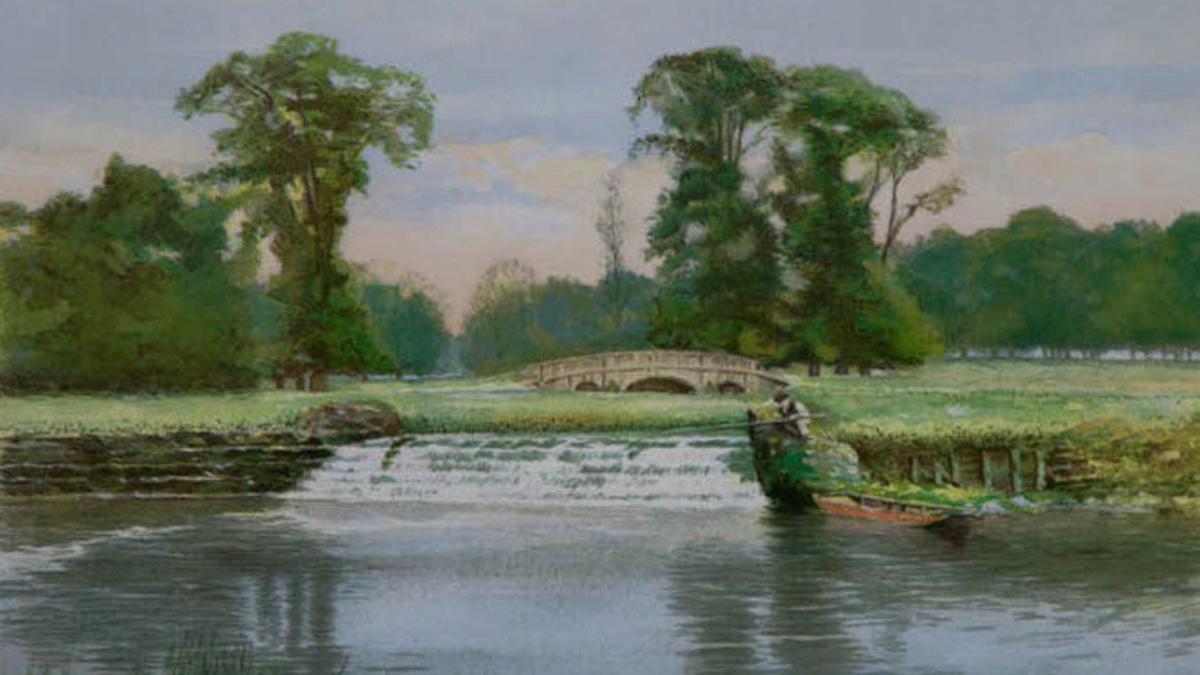
    Note: Featured Image: Charlecote Park, twentieth century, unknown artist. SBT 1985-15: Image Courtesy of the Shakespeare Birthplace Trust
  • Ale Testing – an honourable occupation

    Ale Testing – an honourable occupation

    Hello, and a very Happy 2020!

    I thought I’d start the new year with a guest post (below), from author Jann Tracy. It’s particularly appropriate if any of you are suffering from last night’s revels. Enjoy!

    The earliest records of brewing have been found in Egypt, about 2000 BC, so when John Shakespeare, a glover by trade, became Ale Taster (or Ale Conner) for the borough of Stratford in 1566, not only was he taking up one of the most important public offices in the town, he became part of a long tradition of brewing.

    In a job dating back to Roman times, and appointed yearly at the court leet in England, the Ale Conner was responsible for checking at inns, taverns and alehouses for irregular measures and for ensuring quality control of the product, and would have also tested the wholesomeness of bread, and later, when it became popular, beer.

    The price of ale was related to the price of corn, and therefore affected by bad harvests, and it wasn’t taxed until the 17th century, which meant that in England and Wales, purveyors of ale charged pretty much what they liked. Ale, brewed without hops, didn’t last long in a drinkable state and was better drunk within two days of brewing. County innkeepers economised by brewing their own ale, from which yeast was obtained, used for bread baking and pig food.

    Due to the English climate not being agreeable to the cultivation of grapevines, wine was imported, and, as it was expensive, only indulged in by the wealthy.

    A sixteenth century earthenware tankard.
    Image courtesy of the Shakespeare Birthplace Trust.

    Ale was therefore drunk by everybody, as water was in general not safe to drink and milk was only available at calving time. Milk, however was felt to be too precious to drink unnecessarily and any excess was used for butter and cheese.

    Ale was traditionally brewed by women, as part of the household food supply. Ale-wives could make a living selling the excess to their neighbours, so ale-houses were commonly to be found in your average English home. Imbibers would have taken their own drinking vessels, thus paving the way for a long-standing tradition, still held in some pubs today, of regulars’ glasses being held ‘behind the bar.’

    Brewed in different strengths, the first brew was the strongest, then the second brew was accounted average strength, and ‘small ale’ came from the third. Weak and bitter to taste small ale was suitable for breakfast and for children. Mild alcohol content and the boiling of water, made it a safe drink, and was probably the only, or best, source of vitamin B for the general population. Around 60 gallons a year was drunk on average per person.

    When a new batch of ale was brewed the Ale Conner was notified so he could check the quality. If there was evidence of bad or watered-down ale, overcharging or short measures, the Conner had the power to lower the price of a bad batch. It might seem like a bizarre job today, but in Elizabethan England ale-tasting was an important and highly-respected occupation. Ale was the staple drink in the fifteenth century and the first half of the sixteenth, in both England and Scotland. By the end of the period, ale was giving way to beer, much to the disgust of older members of society who thought it a nasty, foreign brew.

    An oil painting depicting 'Drunken Bidford' dated early to mid 19th century
    An oil painting depicting ‘Drunken Bidford’ (early to mid 19th century).
    Image courtesy of the Shakespeare Birthplace Trust.

    The Ale Conner tradition is still alive and well in the country today, because, when the Corporation of London was established in the nineteenth century the  job was kept going as a specifically City tradition. Today, each of four Ale Conners test ales in the City two to three times a year – usually when a new pub opens, or when it puts on a new ale. It’s a purely ritualistic process now, and has no legal bearing on the pub. As part of the ceremony a pint of ale is poured on a wooden bench and the Conner sits down on it in the leather breeches worn especially for the occasion. After one minute the Conner stands up and if ale does not stick to the breeches, it is not the right consistency. No pub in recent times has yet failed the test and an announcement is made: ‘I proclaim this ale good quality. God save the Queen.’ And everyone proceeds to get merry.

    Jann Tracy is a former proofreader and the author of Marie Corelli: Shakespeare’s Champion.

  • Why coaching?

    Why coaching?

    Over the summer, I was interviewed by Lorrayn de Peyer on her Sid Valley radio show. This was a great opportunity to talk a bit more about writing and its benefits.

    What is it you do. What services do you offer?

    I’m an author, editor and writing coach. I also run workshops for writers.

    How does what you do help people?

    Writing is one of the ways we can express our creativity, like music and art. Sometimes people have writing ambitions but find it hard to make space to write in their busy life. Having a coach can help. Coaching can help you set goals and focus your energies. A coach can help you to see that it’s alright to make time for yourself.

    What led you to become a writer?

    I’d always wanted to write, or at least since I was 10 when I had a poem published in an Australian state newspaper. I dabbled a bit with writing in my twenties but as I got older I realised (like a lot of people) that if I didn’t follow my dreams now I never would. So I started writing for magazines and websites, then went on to novels and short stories. I just wish I’d had the discipline to start sooner – or maybe a coach!

    What is your background?

    I used to be a careers adviser, so I have a lot of experience interviewing people. (I also used to interview people for oral history research which was also fascinating in a different way). Then I did some coaching training and decided that I could use my experience to help people progress their writing. My coaching is about getting your work completed and out there, rather than about how to write – there are lots of people who can help with this also although, I’m a great advocate of try, try and try again.

    How is what you do different from other people?

    Coaching can help a person to see how they CAN make time even if it’s only five minutes a day to begin with. My workshops help re-inspire people so they can believe in their power to create again.

    What is a typical session like?

    Coaching is about listening to the client and raising questions so they can gain a clearer picture of what’s going on for them, think about the key issues and move forward. As the Coaching Academy says, ‘Coaching assists a client to bridge the gap between where they are now, to where they would like to be far more effectively than if they worked alone.’

    My workshops are interactive and fun with practical activities to engage participants, and also full of information they can take away to move forward with their objective/s.

    Are you able to give people any practical tips from your own experience that they can start using now?

    There are many forms of self-expression, e.g. music, gardening, photography – find something you really enjoy and focus on that. When we’re focused on something that means something to us, the rest of the world and our concerns disappear temporarily and we’re totally in the moment. That’s a very special space. That’s also when we produce our best work.

    Do you have an inspirational thought people might find useful?

    Henry Ford, the US captain of industry is believed to have said, ‘whether you think you can or… can’t, you’re right.’

    So believe you CAN.

    I believe mindset plays a huge part in the way we live our lives, so why not give life a helping hand and think positively. Life will throw challenges at us, but it’s how we deal with them that makes the difference, and makes us different too.

  • Cake and a slice of Chastleton

    When Martin Drury of the National Trust said, ‘Our aim is to lay as light a hand as possible on Chastleton, to arrest 150 years of progressive decay…’ he wasn’t far wrong. And, that, in my opinion, is part of its charm.

    Last Friday I went to Chastleton House – a delightful Jacobean house built in the early 17th century for one Walter Jones, who had delusions of grandeur. His family came from trade, and he had ambitions, but despite his best efforts his heirs never became more than country gentry, while the house became increasingly impoverished. And yet it is lovely.

    The National Trust (unlike in so many of its other properties) has maintained the house’s slightly decrepit air, which gives Chastleton a wonderful atmospheric feel. And the stories that go with it are also evocative.

    Its last owners Alan and Barbara Clutton-Brock, who took over the house in 1955, were a talented, rather eccentric couple who made a little extra money running tours of the house. Alan is once said to have noted, when seeing a coach arrive at the gate, ‘Oh good, here comes another bottle of gin up the drive.’ Alan was an artist and art critic, and he also wrote a novel called Murder at Liberty Hall. Although the novel is set in a school, it isn’t hard to imagine he drew on his own old home for inspiration. Having been to Chastleton, I was tempted to dig out the novel and read it but was put off by the price of £132 (via Amazon, Aug. 2019)!

    After Alan died in 1976, Barbara continued to live at Chastleton until 1991, along with her many cats and a parrot. When she finally handed the keys to the National Trust, she apparently said, ‘don’t move anything, once you have disturbed the dust you won’t know where to put anything back.’

    Apart from this amazing house with its many floors and long gallery, which could almost be a home in itself, and the beautiful carved wooden staircase, the garden is also well worth the visit.

    The Best Garden, known as such because it can be seen from the ‘best’ rooms in the house, has a lovely display of topiary which over the years, have morphed into shapes and back again.

    There is also a vegetable garden and croquet lawn and one of the house’s descendants, a Walter Jones Whitmore codified the rules of croquet there in 1866.

    Next door to Chastleton is a pretty little church which serves tea and cake, and the National Trust’s latest plan is to open up the door in the wall of the garden so visitors can pass through from the one to the other.

    Which sounds to me like a great excuse to go back next year, do it all again, and enjoy some cake…

    More about Chastleton (National Trust website)

  • History in the Least Likely Places

    I recently went on a visit up north (Newcastle) and as part of that I visited North Shields. I always think of it as a small place but surprisingly it has a population of around 34,500. Where is everyone?

    Originally known just as Shields, the Shields of the name derives from a word meaning shelter or hut, and refers to the fishermen’s huts that once stood there. Historically part of Tynemouth, North Shields is the site of a well-known fish quay.

    Indeed there is a statue of a fisherman near the quay, and a plaque that goes with it.

    Apart from being a former port, and even having a history of shipbuilding for a while, the area is now of more interest to visitors. Anyone wanting to learn more about the history of the town can read this very informative article.

    A final aside. Ghosts have often featured on this blog so it seems wrong to leave North Shields without including a ghost story (or two).

    A house on Stephenson Street was said to be haunted by a child’s cries and the sobs of a woman, and an infant’s body was later discovered concealed in the building (See Stephenson St, below).

    © Google Maps

    Another story tells of a man who visited North Shields in the late 1960s. One night he was walking down a street when he heard a child in distress. A boy ran past. This happened again, so he reported it to the police. The police asked him to walk the route again but to let them know in advance. They saw the boy and gave chase, but the boy vanished and the cries ceased.

    This happened again, and weeks later, the police called the man and said they’d since learnt that a boy had been murdered on that road, in Victorian times.

    Are the two cases related?

    Finally, at Tynemouth Lodge Hotel, the ghost of a Victorian woman has been seen, chasing two laughing children. The hotel is of interest historically, having been a pub and a residential hotel since 1799.

    In the past, meals for prisoners were prepared in the cellar kitchens and carried via an underground tunnel to the Tynemouth House of Correction next door. The hotel sports a blue plaque (indicating historical significance) – there are nine blue plaques in North Shields. Who knew? Here is another.

  • Smash all the Windows

    Smash all the Windows

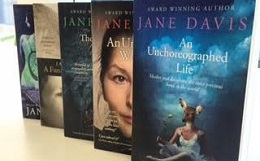
    Smash All the Windows by Jane Davis Today, we welcome Jane Davis, whose latest novel, Smash all the Windows is available from 12 April. Hailed by The Bookseller as ‘One to Watch’, I’m going to let Jane speak to you in her own words about her 8th novel and her writing.

    For those who aren’t familiar with your writing, what can they expect?

    I write about big subjects and give my characters almost impossible moral dilemmas. I don’t allow them a shred of privacy. I know what they’re thinking, what they’re feeling, the lies they tell, their secret fears. But I only meet them at a particular point on their journeys, usually in a highly volatile or unstable situation, and then I throw them to the lions. How people behave under pressure reveals so much about them.

    Can you tell us about your new novel Smash all The Windows?

    The novel began with outrage. I was infuriated by the press’s reaction to the outcome of the second Hillsborough inquest. Microphones were thrust at family members as they emerged from the courtroom. It was put them that, now that it was all over, they could get on with their lives. ‘What lives?’ I yelled at the television.

    For those who don’t know about Hillsborough, a crush occurred during the 1989 FA Cup semi-final, killing 96 fans. A single lie was told about the cause of the disaster: in that moment, Liverpool fans became scapegoats. It would be twenty-seven years before the record was set straight.

    But you chose not to write about Hillsborough. Why was that?

    None of us exists in a vacuum. The pain I saw on the faces of family members as they struggled with the question was raw. I didn’t want to be the one to add to that pain, so I decided to create a fictional disaster. But because I didn’t want to write from a place of comfort, I combined two of my fears – travelling in rush hour by Tube, and escalators.

    The previous year, en route to a Covent Garden book-reading, I’d suffered a fall. The escalator I normally use was out of order. Instead we were diverted to one that was much steeper, but I was totally unprepared for its speed. When I pushed my suitcase full of books in front of me, I was dragged off-balance. Fortunately, no one was directly in front. I escaped relatively unscathed. But the day could have ended very differently.

    How does it fit in with your other books and where does it differ?

    I think it’s my most contemporary book to date. I’ve written it in the present tense because I wanted the parachute the reader   right into the centre of the action. I also have a far larger cast of characters than I’ve worked with before. My disaster blighted the lives of hundreds of people – survivors, witnesses, families, friends, the police, doctors and nurses who had to deal with the aftermath. There was the potential to add more, but I chose to focus on five family members, their partners and the people they lost in the disaster.

    Also, when most injustices are overturned, there is usually an individual in the background. The one who realised that an injustice had been done and who then worked tirelessly behind the scenes in order to construct a case. With the St Botolph and Old Billingsgate disaster, that person was Eric, a law student, still some way from qualifying as a solicitor. The outsider in the story, his arrival proves to be a turning point for families, who’ve all but given up in their search for justice. In the midst of all of the heartbreak and human reaction, his conviction reminds the families that they still have a little fight left in them.

    Is there an important theme (or themes) that this story illustrates?

    In a way this was an odd piece of story-telling, because the reader knows right at the outset what the key event is. The St Botolph and Old Billingsgate disaster was a large-scale disaster that resulted in the deaths of fifty-eight commuters. The challenge was to show the impact of the event on different individuals and their families, who have re-lived it each day of the eighteen month long inquest. Because the accident takes place in an underground station, we see the various characters travelling towards it.

    In fiction, there’s a temptation to try to undo the wrongs of the real world by applying logic, assuming that there is a single ‘truth’. I prefer to ask questions rather than give answers. Who are the victims? Should individuals have been held accountable when large-scale accidents occur, or does this prevent identification of the factors that create circumstances that allow accidents to happen? How should families and friends of victims be treated when they’re searching for or identifying loved ones? Should those same people be allowed to participate fully in inquests? But it’s not a book about technicalities. It’s about human resilience, healing and art.

    Have you compared the book to any other writers or novels you’ve read? What’s the same? What’s different?

    I hope it will be enjoyed by readers of How to be Both by Ali Smith and How to Paint a Dead Man by Sarah Hall. Both have much to say on fragile, precious and unpredictable life is. Both focus on what it means to be human and our innate connection with art. Neither is likely to put you off escalators…

    Smash all the Windows will be released on 12 April. You can order it here. Don’t miss out!