Tag: History

  • Cake and a slice of Chastleton

    When Martin Drury of the National Trust said, ‘Our aim is to lay as light a hand as possible on Chastleton, to arrest 150 years of progressive decay…’ he wasn’t far wrong. And, that, in my opinion, is part of its charm.

    Last Friday I went to Chastleton House – a delightful Jacobean house built in the early 17th century for one Walter Jones, who had delusions of grandeur. His family came from trade, and he had ambitions, but despite his best efforts his heirs never became more than country gentry, while the house became increasingly impoverished. And yet it is lovely.

    The National Trust (unlike in so many of its other properties) has maintained the house’s slightly decrepit air, which gives Chastleton a wonderful atmospheric feel. And the stories that go with it are also evocative.

    Its last owners Alan and Barbara Clutton-Brock, who took over the house in 1955, were a talented, rather eccentric couple who made a little extra money running tours of the house. Alan is once said to have noted, when seeing a coach arrive at the gate, ‘Oh good, here comes another bottle of gin up the drive.’ Alan was an artist and art critic, and he also wrote a novel called Murder at Liberty Hall. Although the novel is set in a school, it isn’t hard to imagine he drew on his own old home for inspiration. Having been to Chastleton, I was tempted to dig out the novel and read it but was put off by the price of £132 (via Amazon, Aug. 2019)!

    After Alan died in 1976, Barbara continued to live at Chastleton until 1991, along with her many cats and a parrot. When she finally handed the keys to the National Trust, she apparently said, ‘don’t move anything, once you have disturbed the dust you won’t know where to put anything back.’

    Apart from this amazing house with its many floors and long gallery, which could almost be a home in itself, and the beautiful carved wooden staircase, the garden is also well worth the visit.

    The Best Garden, known as such because it can be seen from the ‘best’ rooms in the house, has a lovely display of topiary which over the years, have morphed into shapes and back again.

    There is also a vegetable garden and croquet lawn and one of the house’s descendants, a Walter Jones Whitmore codified the rules of croquet there in 1866.

    Next door to Chastleton is a pretty little church which serves tea and cake, and the National Trust’s latest plan is to open up the door in the wall of the garden so visitors can pass through from the one to the other.

    Which sounds to me like a great excuse to go back next year, do it all again, and enjoy some cake…

    More about Chastleton (National Trust website)

  • History in the Least Likely Places

    I recently went on a visit up north (Newcastle) and as part of that I visited North Shields. I always think of it as a small place but surprisingly it has a population of around 34,500. Where is everyone?

    Originally known just as Shields, the Shields of the name derives from a word meaning shelter or hut, and refers to the fishermen’s huts that once stood there. Historically part of Tynemouth, North Shields is the site of a well-known fish quay.

    Indeed there is a statue of a fisherman near the quay, and a plaque that goes with it.

    Apart from being a former port, and even having a history of shipbuilding for a while, the area is now of more interest to visitors. Anyone wanting to learn more about the history of the town can read this very informative article.

    A final aside. Ghosts have often featured on this blog so it seems wrong to leave North Shields without including a ghost story (or two).

    A house on Stephenson Street was said to be haunted by a child’s cries and the sobs of a woman, and an infant’s body was later discovered concealed in the building (See Stephenson St, below).

    © Google Maps

    Another story tells of a man who visited North Shields in the late 1960s. One night he was walking down a street when he heard a child in distress. A boy ran past. This happened again, so he reported it to the police. The police asked him to walk the route again but to let them know in advance. They saw the boy and gave chase, but the boy vanished and the cries ceased.

    This happened again, and weeks later, the police called the man and said they’d since learnt that a boy had been murdered on that road, in Victorian times.

    Are the two cases related?

    Finally, at Tynemouth Lodge Hotel, the ghost of a Victorian woman has been seen, chasing two laughing children. The hotel is of interest historically, having been a pub and a residential hotel since 1799.

    In the past, meals for prisoners were prepared in the cellar kitchens and carried via an underground tunnel to the Tynemouth House of Correction next door. The hotel sports a blue plaque (indicating historical significance) – there are nine blue plaques in North Shields. Who knew? Here is another.

  • The Forgotten

    The Forgotten

    SS Atlantic disaster (Currier and Ives Lithographs)When I wrote my first novel, Ship of Haunts, the focus was on child migration, ghosts and Titanic. Titanic is well-known for being a major maritime disaster. But there have been many other tragedies, also with significant loss of life, and in Ship of Haunts, as well as Carrin, whose ghost haunts Titanic, we meet someone from the Empress of Ireland and a man called Aaron who was drowned on a ship called the SS Atlantic. Aaron gets bored staying by his ship under the sea, after it sank and wanders off and finds Titanic. Aaron and Carrin become ghost-friends, bound together by their shared tragedy and current home under the ocean.

    I recently did a talk on the Atlantic and its sad history, because I felt that it’s important we remember all shipwrecks, not just the ones which are most obvious. Here, below, is a summarised version of that talk.

    The Forgotten.

    What makes a ship sink? When people talk about Titanic, and how she sank, they cite many things such as Captain Smith’s failure to navigate the iceberg – he wasn’t even on deck at the time, but instead eating his supper inside. There are numerous other things they cite, such as the repairs to Olympic, a sister ship, which delayed the departure of Titanic – had it not been for this, Titanic might never have hit that iceberg. And the list goes on.

    But what if no-one remembered Titanic? All those people (1,500) tragically dead; it’s unimaginable, isn’t it?

    The Atlantic is a ship very few remember, despite the enormous loss of life. At the time it was a terrible tragedy. It should be remembered.

    ‘The world’s worst single vessel maritime disaster, before Titanic in 1912.’

    The wreck of the SS Atlantic – divers recovering bodies and cargo, 1873So what happened

    The Atlantic sank, somewhat ironically, on 1 April 1873, near Halifax in Nova Scotia. The weather was bad, the wind was high and the sea very cold and decidedly choppy.

    She left Liverpool on 20 March, heading for New York, but the Captain ran into a bout of  bad weather and also feared a shortage of fuel so he decided to head for Halifax (Canada, not Yorkshire!).

    At that point the tragedy happened. She ran aground after striking a rock which left a vicious gash in her side. The ship began sinking.

    Officers tried to get lifeboats out by chopping at ropes frantically with axes. But sadly the boats were washed away in what was now a terrible storm. It’s doubtful even if they’d been lowered properly whether they could have floated off. Conditions were dreadful.

    People died, up on the deck as the ship began sinking, taking in water, and worse still, those below were trapped in the rush to get up and escape.  There was no way out.

    The Final Death Toll

    Reports vary as to the numbers. The official Canadian report of the time says more than 500 people died. This was out of 957.

    Deaths included all of the women and all but one of the children on board. Many men were heroes that night, refusing to leave their wives to their fate. Others climbed the rigging to escape, as part of the rigging was still above water.

    SS Atlantic disaster. Officer BradyWorst of all, the SS Atlantic wasn’t far from shore. Officer Brady, an enterprising man, swam out to a rock, probably part of the one the ship hit, and with two colleagues, engineered a system of ropes, so men could swim, first to the rock, and then from the rock to a nearby island. Fifty men were saved this way, but many others died. Brady and the others did their best.

    Early in the morning, around 6 am, people from the island sent out boats to rescue those on the rock and the rigging. The rescue continued until midday. Meanwhile the wild and stormy weather raged on.

    So who was to blame?

    At first it seemed to be only the weather but…

    The ship was due to arrive in New York in early April, but made little progress due to the weather. The captain decided to head for Halifax, fearing conditions and a shortage of fuel.

    When the ship had previously left Queenstown, she appeared to have left with not enough coal – so much so that there were strong reactions to her leaving the port. But the owners said there was more than enough fuel for the journey.

    The report of the tragedy laid some blame on Captain Williams and suspended his certificate for two years.

    The Captain himself blamed miscalculations of speed and the current – the ship was off course and going too fast.

    The papers of the time blamed the officers on board: for not being on the lookout for land and the dangers of rocks in the area.

    There were also discipline problems on board  –  some of the crew had previously broken into a room where the drink was kept. Later, when the rescue boats came, crew were rumoured to have pushed passengers aside so they could get on board the boats first. There was also theft from the bodies of the dead. It was all very tragic.

    And perhaps we’ll never know the full story…

    There is one sad but interesting tale

    One of the women who died that night, possibly American and in her early 20s, had been a member of the ship’s crew. She’d been on board for three voyages. But everyone thought this woman was a man. As one of her fellow crewmates said

    ‘I never realised Bill was  a woman. He took his grog like the rest of us and was always begging and stealing tobacco. But all the same, he was a good fellow, and I’m sorry he turned out to be a woman.’

    Remembering

    With subsequent, more high-profile disasters, like the loss of Titanic and the Lusitania, the Atlantic tragedy has been Burial service for the victims of SS Atlantic, 1873forgotten. But in the 1990s something happened.

    The Atlantic’s dead were buried in two locations, one of which was a small churchyard in Sandy Cove, not far from where the Atlantic sank. The ship stills rests there, even now, at the bottom of a slope less than 75 ft beneath the surface.

    This area where the dead were buried, was sadly subject to coastal erosion. At that time, more than a century after the sinking, 30 feet of bank vanished, and waves crashing against the grave sites meant that the graves’ contents became exposed. Victims’ bones could now be seen.

    Although the Atlantic had been forgotten, some of the victims of the ship made sure, apparently, that they and their shipmates would be remembered.

    A final thought

    Shipwrecks weren’t uncommon at the time, but the White Star Line suffered badly from the sinking. Passenger bookings were low for a year after the tragedy. The loss of lives and the circumstances surrounding the sinking almost spelt doom for the company that owned her. It’s rather ironic to consider the fact that if White Star had indeed gone under, RMS Titanic would never have been built…

  • Ghost Stories and Shadows Online

    Ghost Stories and Shadows Online

    Firstly, thank you, all of you (1036 people – amazing!) who entered the recent Goodreads Giveaway for Shadows of the Lost Child, my most recent novel. Congratulations to the lucky winners, your book will be winging its way towards you soon; and commiserations to those who didn’t.

    But the good news is… the ebook version is now on SALE, and for a limited time, is Aleph's house in the novel Shadows of the Lost Childavailable at a reduced price: check it out here:

    http://tinyurl.com/qdolfd6 (UK) & http://tinyurl.com/ks3ksng (U. States)

    OR, via http://authl.it/B00NGSSVM2 (all countries).

    I hope you enjoy it. There’s a missing boot, and a mystery to solve and a girl called Alice who crosses time to meet a boy called Tom – and will there be a happy ending? You’ll just have to read it!

    In the meantime, here are two ghost stories – not unfortunately, with happy endings, but of interest, especially if you’ve been to Warwickshire. Don’t go alone!

    White Swan Hotel, Henley-in-Arden, 2010 by Alexander P. KappThe White Swan Hotel, Henley-in-Arden

    Henley-in-Arden, not that far from Stratford-upon-Avon, is a small town, with one main High Street. On this street is the White Swan Hotel; the present building dates from around 1600, but there’s thought to have been an inn on this site since the 14th century. At one time the site was apparently a stopping point on the stage coach route between Birmingham and London.

    The ghost was a woman called Virginia Black, who fell down the stairs, having quarrelled with a man in 1845. She may have been a ‘lady of the night’ and he may have been a client of hers. It’s said she roams the hotel’s corridor, lingering outside room 17…

    In case you should visit the inn yourself, she hasn’t been seen for some time!

    The inn was once the site of the local court, in the mid-late 19th century. The courtyard was used for public hangings, and a ghost was said to have lingered there for some years, after she was hung, for murder.

    Charlecote Park, 2013 by Karen.stepanyan (Wikimedia Commons)Charlecote Park

    Also not far from Stratford-upon-Avon, is Charlecote Park, now a National Trust property and open to visitors. The house itself is said to be haunted, but so is the lake, by the ghost of a woman, possibly a servant, who may have drowned herself there in the past.

    According to the story, her shadowy figure drifts from the house to the site of the lake, throws herself in, then disappears. Oddly enough, there’s never a splash, or ripples on the water.

    Shadows of the Lost Child (novel)

    Get your own ghosts and shadows to take home with an ebook version of Shadows of the Lost Child;  now on SALE until Saturday 28 February. Available from Amazon at:

    http://tinyurl.com/qdolfd6 (UK) & http://tinyurl.com/ks3ksng (U. States)

    Article written by Ellie Stevenson, author.

    This article is copyrighted material. Brief extracts including a link to this site can be quoted but the article must not be reproduced in full anywhere without the author’s written permission.

    Sources

    Images

  • Was Borley Haunted? It wasn’t just the house

    Was Borley Haunted? It wasn’t just the house

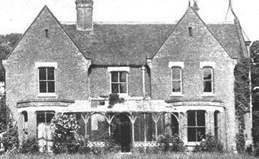
    Borley Rectory in an earlier timeYou’ll know I’ve talked about Borley before, probably the most famous haunting of all. I thought I’d covered most of the story.

    But it seems there’s always a little bit more and I wanted to share this snippet with you. For those who don’t know much about Borley Rectory, you can read the earlier posts here:

    Borley Rectory: the house and its ghosts – part one

    Borley Rectory: the house and its ghosts – part two

    Now for the postscript.

    A London journalist, Montague Eleman, who’d heard of the case while a serving soldier, hoped to sell his story to the dailies, and once demobbed, set off for Borley to see it for himself. He was a little bit late. By the time he got there it was 1946, and the house by then had been demolished. After walking around the rubble for a while and chatting to any people he could find, he left for London, carrying a piece of wood with him – the wood was charred (because of the fire) and possibly from the roof or the floor. The next nine years were something of a nightmare.

    Arriving back in London that evening, he left the wood on the mantelpiece, in the room he used at his sister’s house and then went down to supper, alone. He heard a noise and when he looked up his sister was there, claiming she’d seen a nun in his bedroom. It didn’t stop there.

    In the nights that followed, Eleman and his family heard quite a few noises, ranging from screams to a clock chiming, all quite close to where the wood was. But eventually, the noise settled down.

    When several weeks later, Eleman moved and took up lodgings in a seaside town, there were several more incidents, the doorbell rang when no-one was there, and a dark-clad person crossed the landing. Needless to say, he’d brought the wood with him.

    Eleman finally sussed that whenever he moved to a new location and took the wood, the disturbance increased, but then eased off, as if whatever it was that had been disturbed had now settled down. In 1955, after nine long years he gave the piece of timber away. Nobody knows where that wood is now.

    Or maybe they do…Borley Rectory after the fire

    Borley’s story is quite exceptional, it transcends time, people and the place, as we’ve just seen. But this wasn’t the first time the haunting had extended beyond the house.

    In 1928, (Guy) Eric Smith and his wife Mabel moved into Borley after being abroad. They didn’t know that other vicars had refused the living, because of the house’s reputation. Like other residents before and since, the Smiths experienced some strange incidents. A mirror on Mrs Smith’s dressing table began tapping whenever she came near it, and this continued after they left Borley.

    Some years later, in 1937, the Smiths were living in a village in Kent, when they were visited by Sidney Glanville. Glanville was one of Price’s researchers. He held the mirror in his hands. A week after he’d visited the Smiths and held the mirror he received a letter asking if he’d brought a ghost with him because ‘the mirror has started tapping again.’ He never went back to the house to find out.

    Ghosts aren’t always tied to a house.

    Shadows of the Lost Child - a novel and ghost storyMy latest novel, a partly historical mystery, with a time travel element, also centres around a house: there are ghosts in the story, but are the ghosts connected to the house? You’ll have to read the book to find out…

    Article written by Ellie Stevenson, author.

    This article is copyrighted material. Brief extracts including a link to this site can be quoted but the article must not be reproduced in full anywhere without the author’s written permission.

    Sources

    Adams, P. & Brazil, E. Extreme Hauntings: Britain’s most terrifying ghosts, History Press, 2013

    Glanville, S. The Strange Happenings at Borley Rectory (originally in American Fate magazine, 1951)

    Images (Wikimedia Commons)

    Borley Rectory before the fire

    Borley Rectory as a ruin

  • Books and More: at the Indie Author Fair at the Chorleywood LitFest

    Books and More: at the Indie Author Fair at the Chorleywood LitFest

    Books at the Indie Author FairThe last few weeks have been so busy, this blog has taken a bit of a back seat. But at last, I can talk a bit about my book. And Chorleywood Lit Fest.

    Last weekend, I visited Chorleywood, not that I saw that much of the place, I was at the Indie Author Fair at the Chorleywood LitFest. Forty or so indie authors gathered together in a very small room, to share our work, with displays and readings, talking to readers, and also to each other. The room had a definite buzz, a life. At the end of the day we’d made new friends, and got to meet fellow ALLi* members, people we’d spoken to on Facebook or Twitter but never actually met in person. And a few we already knew.

    Indie Authors at the Indie Author Fair, Chorleywood Nov. 2014

    It was great fun, and here I’ve shared a few photos of the day. Of people and books. Because that’s what ALLi’s all about – helping each other, sharing professional expertise, and building a platform to showcase our work. The range of titles there was amazing, as was the enthusiasm – thanks ALLi, for being such a great professional network.

    Books at the Indie Author Fair

    And now to the book. My latest, partly historical novel, with a supernatural edge, is now out in print as well as in ebook. Shadows of the Lost Child - a novel and ghost storyIt’s set in a fictional city called Curdizan, in the present day, and also in the past, and centres on the story of a house. Which was once a school. In the present day, Aleph Jones, a troubled man with a dark secret he’s desperate to hide, is introduced to a girl called Alice, who won’t speak. Alice has a very special gift, she can cross time, and when she steps into the nineteenth century she meets a boy from the slums called Tom, and mystery, mayhem and death follow. There might even be a ghost or two in the story…

    But let Tom tell you his story himself.

    I should have been helping Miranda in the pub, but instead I went up to Curdizan High, to look for Louise. The High’s the part where the abbey is, as well as my school, although nothing about the place is high. I walked past the school and finally came to Pearson’s Tenements, that’s where she lives, but Louise wasn’t there, surprise, surprise. I wasn’t surprised, the place was a dump, but all the same, I had to look. The tenement building was tall and grim, tiny spaces joined by a stairway and open landings, the black of the open night in between. I thought they were more like rooms than landings, people’s possessions scattered about, rooms on the outside. I thought of escape.

    I once saw a woman jump from a landing, far too high from the ground to be safe, but almost worse, too low to be dead, and gone in a flash. They patched her up, as best as they could, and she even went back to her room for a bit, but she never walked the same after that and not long after, finally died. I didn’t know it at the time, but her name was May, and she was also Louise’s ma. I never did learn which room she came from.

    I shivered, scared in the black of the stairway, I knew I ought to go back, and soon. Miranda would be wondering where I was. But I’d promised old Pike I’d find Louise.

    ‘He’s Mister Pike,’ my ma would say, but she didn’t know Pike the way I knew him, he didn’t deserve to be called Mister. He was cold, indifferent and sometimes cruel; he’d said if I didn’t find Louise, he’d throw her out of the school for good, and she’d end up lost, like Miranda’s ma. I didn’t know what he meant by that, but I didn’t much like the way he’d said it, and I liked Louise, she wasn’t rough like most of the kids, and she lived in a flea pit, storeys high. If I had to live in Pearson’s Tenements, in amongst all the privy smells, I’m sure I’d forget to go to school. School would be just a dream or something.

    I reached a landing, the fourth or fifth, I didn’t know which, so I tossed a huge stone over the edge, and counted until I heard it land. Although I’d looked, I hadn’t found her. I’d even tried a few of the doors, but nobody seemed to know her name. A shadow slunk by and I held my breath, you’re never alone in a place like this. I turned around, got ready to run, but a hand shot out and grabbed my collar, pulling me back, very sharply. Somebody’s hand against my mouth. The somebody spoke.

    Shadows of the Lost Child, available on Amazon – a great present, or a treat for yourself, available in ebook, or in print.

    http://tinyurl.com/ks3ksng (US) and http://tinyurl.com/nbofbnv (UK)

    If you’ve read the book, or after you have, I’d love to hear your comments here. And as you may know from a previous post, the book was inspired by historic York, so if you’ve ever lived in York, or know the city, you might particularly enjoy the story.

    Article written by Ellie Stevenson, author.

    This article is copyrighted material. Brief extracts including a link to this site can be quoted but the article must not be reproduced in full anywhere without the author’s written permission.

    Want to share this post on Twitter? Here’s a suggested tweet for your timeline:

    ‘A hand shot out & grabbed my collar, pulling me back, very sharply. Then somebody spoke.’ #ShadowsoftheLostChild http://authl.it/B00NGSSVM2