Tag: Shakespeare

  • Charlecote: bringing history to you

    Charlecote: bringing history to you

    Although Charlecote Park, Warwickshire is closed at the moment, due to the current social distancing regulations, we can still enjoy its history.

    Charlecote Park, managed by the National Trust, lies 5.4 miles east of Stratford-upon-Avon.

    In the 1550s the estate was at the south edge of the Forest of Arden, but over time the landscape became more open as trees were removed to create a deer park. In the eighteenth century the grounds were landscaped by Capability Brown.

    The Lucy family managed the house for generations. From 1823 to 1867, under the care of George Hammond and Mary Elizabeth Lucy, the house was rebuilt in the Elizabethan style. In her time, Elizabeth I had visited Charlecote, as had possibly another well-known person…

    I’ve been reading a lot of books about Shakespeare lately.

    A 19th century oil painting showing the apocryphal story of Shakespeare poaching deer from Charlecote. Shakespeare is shown with Sir Thomas Lucy before the gateway.
    SBT 1970-7: Image Courtesy of the Shakespeare Birthplace Trust

    One of the most popular stories from Will’s lost years is that he was caught poaching on Sir Thomas Lucy’s land, and maybe that’s why he went to London. This idea was first put in print in 1709 by Nicholas Rowe, Shakespeare’s earliest biographer, but was in general circulation at the time. R. Bearman (2004) has suggested that while the story deserves consideration it could have arisen out of a passage in the Merry Wives of Windsor, and notes that Shakespeare probably had little time for Thomas Lucy and wanted to satirise him.

    Thomas Lucy, a Protestant, and supporter of Queen Elizabeth, was in his day the local anti-Catholic enforcer, while Will’s father, John had been on a list of recusants, although John used fear of being served with a writ for debt as an excuse for non-attendance. It seems likely, however, from the company he kept, that John was a Catholic supporter. This would have given his son, Will ample reason to dislike Lucy.

    The Renovations

    Centuries later, as part of the re-building of the house in the Elizabethan style, Charlecote’s Great Hall was renovated:  the barrel vaulted ceiling was created in plaster, then painted to look like timber, while the walls were finished in plaster and painted to look like stone. This reminds us that history is not always all it seems.

    The gatehouse was the only sixteenth century feature to survive the nineteenth century restorations completely unaltered.

    George Hammond Lucy, the owner at that time, died intestate in 1845 – he was only fifty-six. Perhaps house renovations wore him out – I know that feeling. After George died, Mary Elizabeth’s brother, Hugh suggested she should let Charlecote and sell off some of her possessions to provide for her younger children. But Mary Elizabeth was a spirited, lively character. She was determined to stay on at Charlecote, ‘even if I have to live upon a crust, nor shall any of the paintings or furniture be sold.’

    A few years later, two thieves broke into Charlecote.  

    ‘What have they taken?’ Mary Elizabeth asked, in panic, springing out of bed.

    ‘Everything,’ the butler said, ‘but don’t be frightened ma’am…’ The irony is she’d been more frightened by his knocking than by the burglars themselves.

    The thieves were caught, sentenced and found guilty. Mary said: ‘Bradshaw was sentenced to fifteen years’ transportation and Evans ten. The lightness of the sentence surprised the prisoners as indeed it did… all in court, and more particularly myself.’ Mary was a woman of her time and class.

    An early twentieth century embroidered needlework copy of the Sheldon tapestry map of Stratford-upon-Avon.
    SBT 1928-9/2: Image Courtesy of the Shakespeare Birthplace Trust

    The Later Years

    Sadly, (Henry) Spencer Lucy, Mary Elizabeth’s son didn’t share her appreciation of fine things. He was the last of the old era and enjoyed a squire’s life of entertaining. Spencer was  said to be a generous host and full of stories. Charlecote was now warmed by hot air which flowed through ornamental grills in the floors. Life could be good. But when the bills began to mount, Spencer decided to start selling off the paintings.

    That was in 1888 and by 1890 he was dead.

    In 1946 the National Trust took over management of the property.

    Sources

    Lucy, Mary Elizabeth (1989) Mistress of Charlecote: the memoirs of Mary Elizabeth Lucy, Victor Gollancz.

    Shakespeare Birthplace Trust: Discover Shakespeare (Online Catalogue)

    Wood, Michael (2003) In Search of Shakespeare, BBC Worldwide.

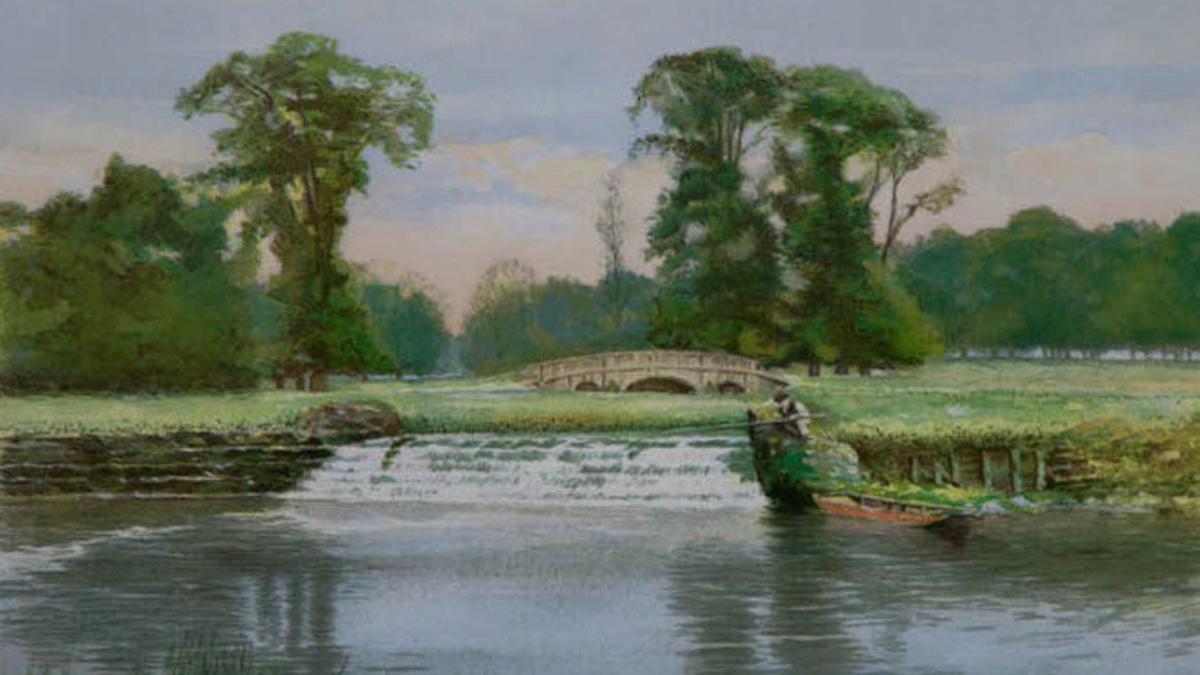
    Note: Featured Image: Charlecote Park, twentieth century, unknown artist. SBT 1985-15: Image Courtesy of the Shakespeare Birthplace Trust
  • Ale Testing – an honourable occupation

    Ale Testing – an honourable occupation

    Hello, and a very Happy 2020!

    I thought I’d start the new year with a guest post (below), from author Jann Tracy. It’s particularly appropriate if any of you are suffering from last night’s revels. Enjoy!

    The earliest records of brewing have been found in Egypt, about 2000 BC, so when John Shakespeare, a glover by trade, became Ale Taster (or Ale Conner) for the borough of Stratford in 1566, not only was he taking up one of the most important public offices in the town, he became part of a long tradition of brewing.

    In a job dating back to Roman times, and appointed yearly at the court leet in England, the Ale Conner was responsible for checking at inns, taverns and alehouses for irregular measures and for ensuring quality control of the product, and would have also tested the wholesomeness of bread, and later, when it became popular, beer.

    The price of ale was related to the price of corn, and therefore affected by bad harvests, and it wasn’t taxed until the 17th century, which meant that in England and Wales, purveyors of ale charged pretty much what they liked. Ale, brewed without hops, didn’t last long in a drinkable state and was better drunk within two days of brewing. County innkeepers economised by brewing their own ale, from which yeast was obtained, used for bread baking and pig food.

    Due to the English climate not being agreeable to the cultivation of grapevines, wine was imported, and, as it was expensive, only indulged in by the wealthy.

    A sixteenth century earthenware tankard.
    Image courtesy of the Shakespeare Birthplace Trust.

    Ale was therefore drunk by everybody, as water was in general not safe to drink and milk was only available at calving time. Milk, however was felt to be too precious to drink unnecessarily and any excess was used for butter and cheese.

    Ale was traditionally brewed by women, as part of the household food supply. Ale-wives could make a living selling the excess to their neighbours, so ale-houses were commonly to be found in your average English home. Imbibers would have taken their own drinking vessels, thus paving the way for a long-standing tradition, still held in some pubs today, of regulars’ glasses being held ‘behind the bar.’

    Brewed in different strengths, the first brew was the strongest, then the second brew was accounted average strength, and ‘small ale’ came from the third. Weak and bitter to taste small ale was suitable for breakfast and for children. Mild alcohol content and the boiling of water, made it a safe drink, and was probably the only, or best, source of vitamin B for the general population. Around 60 gallons a year was drunk on average per person.

    When a new batch of ale was brewed the Ale Conner was notified so he could check the quality. If there was evidence of bad or watered-down ale, overcharging or short measures, the Conner had the power to lower the price of a bad batch. It might seem like a bizarre job today, but in Elizabethan England ale-tasting was an important and highly-respected occupation. Ale was the staple drink in the fifteenth century and the first half of the sixteenth, in both England and Scotland. By the end of the period, ale was giving way to beer, much to the disgust of older members of society who thought it a nasty, foreign brew.

    An oil painting depicting 'Drunken Bidford' dated early to mid 19th century
    An oil painting depicting ‘Drunken Bidford’ (early to mid 19th century).
    Image courtesy of the Shakespeare Birthplace Trust.

    The Ale Conner tradition is still alive and well in the country today, because, when the Corporation of London was established in the nineteenth century the  job was kept going as a specifically City tradition. Today, each of four Ale Conners test ales in the City two to three times a year – usually when a new pub opens, or when it puts on a new ale. It’s a purely ritualistic process now, and has no legal bearing on the pub. As part of the ceremony a pint of ale is poured on a wooden bench and the Conner sits down on it in the leather breeches worn especially for the occasion. After one minute the Conner stands up and if ale does not stick to the breeches, it is not the right consistency. No pub in recent times has yet failed the test and an announcement is made: ‘I proclaim this ale good quality. God save the Queen.’ And everyone proceeds to get merry.

    Jann Tracy is a former proofreader and the author of Marie Corelli: Shakespeare’s Champion.