Tag: books

  • Family History isn’t always about Family

    Family History isn’t always about Family

    I’m an avid reader – well, what a surprise. And although I enjoy crime novels, memoirs and mysteries I also like other books. So when The Bookbinder of Jericho appeared on my radar, being born in Oxford and knowing the place reasonably well, I wanted to read it. Well, what a lovely book. The author (or editor) helpfully put a map at the front so I could navigate my way round the streets of Oxford while enjoying the story.

    Set in the time of WW1, Peggy and her sister Maude, work at OUP (Oxford University Press), in the bindery. Peggy, however, has ambitions, she wants to go to Oxford University. Does she succeed? Well, I’ll leave you to read the book. This delightful story takes you back to that period in history and to the challenges that people faced then. Oxford and the First World War became real to me, more than just the pages of a book.

    So when I reached the end, and discovered an image of signatures from the actual bindery in 1915, I wanted to know more about the actual people who worked there. So I picked one – and here she is: Emily E. Steventon (did I choose her because her name was like mine? Perhaps).

    At the time of the 1911 census (just 4 years before her signature appears in the list of bindery staff), Emily was 31 (so around 35 in 1915). She was born in 1879 or 1890 and had a sister 11 years younger: Thirza Ellen Hedges. Note the different last names. The girls’ mum was also called Thirza and in 1911 she was a widow. In 1911, both girls worked for the University Printing Office, Emily as a book folder and Thirza as a book gatherer. They lived in Wellington Street.

    Emily’s dad was called Walter and, at the time of the 1881 census, was a fishmonger. It’s possible, however, that he died in 1887, and Thirza remarried very quickly (within months) – to a Joseph Hedges, with whom she had Thirza jnr. She also had two other children (with Walter): Emma and Caroline, although it’s possible that at some point Emma, sadly, died.

    By 1901, the family have moved down the road to another house in Wellington Street – the one they live at in 1911. But by 1901 Caroline (Emily’s older sister) has moved out (she marries in 1903). By 1911, Joseph too has died (he may have died in 1906) and there are only the three women: Thirza, Emily and Thirza jnr in the house.

    In 1915, the year of Emily’s signature in the book, her mum dies, aged around 59. In this same year, Thirza jnr gets married, to Harold George, but their marriage is short, because Harold dies in May 1921, at the same address in Wellington Street. Thirza and Harold had one child, a son, Ronald. Thirza lived much longer than her husband – until 1957, when she would have been around 65.

    Emily probably never married. In the 1921 census, she was 42 and living with her nephew Ronald (Thirza’s son) and his wife, Ellen. She died in the first quarter of 1929, aged just 50, so younger than her mother and sister were when they died. But Emily’s signature lives on in the records, and in Pip Williams’ book. And her life, and those of the people around her in Jericho won’t be forgotten. Family history isn’t always just about family.

    Join me for a family history workshop, looking specifically at memorabilia, photos, letters and other treasures this Friday (9 May). Tickets available from the Stratford Literary Festival website.

  • Smash all the Windows

    Smash all the Windows

    Smash All the Windows by Jane Davis Today, we welcome Jane Davis, whose latest novel, Smash all the Windows is available from 12 April. Hailed by The Bookseller as ‘One to Watch’, I’m going to let Jane speak to you in her own words about her 8th novel and her writing.

    For those who aren’t familiar with your writing, what can they expect?

    I write about big subjects and give my characters almost impossible moral dilemmas. I don’t allow them a shred of privacy. I know what they’re thinking, what they’re feeling, the lies they tell, their secret fears. But I only meet them at a particular point on their journeys, usually in a highly volatile or unstable situation, and then I throw them to the lions. How people behave under pressure reveals so much about them.

    Can you tell us about your new novel Smash all The Windows?

    The novel began with outrage. I was infuriated by the press’s reaction to the outcome of the second Hillsborough inquest. Microphones were thrust at family members as they emerged from the courtroom. It was put them that, now that it was all over, they could get on with their lives. ‘What lives?’ I yelled at the television.

    For those who don’t know about Hillsborough, a crush occurred during the 1989 FA Cup semi-final, killing 96 fans. A single lie was told about the cause of the disaster: in that moment, Liverpool fans became scapegoats. It would be twenty-seven years before the record was set straight.

    But you chose not to write about Hillsborough. Why was that?

    None of us exists in a vacuum. The pain I saw on the faces of family members as they struggled with the question was raw. I didn’t want to be the one to add to that pain, so I decided to create a fictional disaster. But because I didn’t want to write from a place of comfort, I combined two of my fears – travelling in rush hour by Tube, and escalators.

    The previous year, en route to a Covent Garden book-reading, I’d suffered a fall. The escalator I normally use was out of order. Instead we were diverted to one that was much steeper, but I was totally unprepared for its speed. When I pushed my suitcase full of books in front of me, I was dragged off-balance. Fortunately, no one was directly in front. I escaped relatively unscathed. But the day could have ended very differently.

    How does it fit in with your other books and where does it differ?

    I think it’s my most contemporary book to date. I’ve written it in the present tense because I wanted the parachute the reader   right into the centre of the action. I also have a far larger cast of characters than I’ve worked with before. My disaster blighted the lives of hundreds of people – survivors, witnesses, families, friends, the police, doctors and nurses who had to deal with the aftermath. There was the potential to add more, but I chose to focus on five family members, their partners and the people they lost in the disaster.

    Also, when most injustices are overturned, there is usually an individual in the background. The one who realised that an injustice had been done and who then worked tirelessly behind the scenes in order to construct a case. With the St Botolph and Old Billingsgate disaster, that person was Eric, a law student, still some way from qualifying as a solicitor. The outsider in the story, his arrival proves to be a turning point for families, who’ve all but given up in their search for justice. In the midst of all of the heartbreak and human reaction, his conviction reminds the families that they still have a little fight left in them.

    Is there an important theme (or themes) that this story illustrates?

    In a way this was an odd piece of story-telling, because the reader knows right at the outset what the key event is. The St Botolph and Old Billingsgate disaster was a large-scale disaster that resulted in the deaths of fifty-eight commuters. The challenge was to show the impact of the event on different individuals and their families, who have re-lived it each day of the eighteen month long inquest. Because the accident takes place in an underground station, we see the various characters travelling towards it.

    In fiction, there’s a temptation to try to undo the wrongs of the real world by applying logic, assuming that there is a single ‘truth’. I prefer to ask questions rather than give answers. Who are the victims? Should individuals have been held accountable when large-scale accidents occur, or does this prevent identification of the factors that create circumstances that allow accidents to happen? How should families and friends of victims be treated when they’re searching for or identifying loved ones? Should those same people be allowed to participate fully in inquests? But it’s not a book about technicalities. It’s about human resilience, healing and art.

    Have you compared the book to any other writers or novels you’ve read? What’s the same? What’s different?

    I hope it will be enjoyed by readers of How to be Both by Ali Smith and How to Paint a Dead Man by Sarah Hall. Both have much to say on fragile, precious and unpredictable life is. Both focus on what it means to be human and our innate connection with art. Neither is likely to put you off escalators…

    Smash all the Windows will be released on 12 April. You can order it here. Don’t miss out!

  • The Floozy in the Park: history, hats and small islands

    The Floozy in the Park: history, hats and small islands

    The Floozy in the Park by Ellie StevensonAt last! My third novel (ebook version) is finally available.

    You can find it on Amazon.

    But what’s it about, you ask? Oh, all the usual things, mystery, history and the occasional ghost. We also have an unsolved murder.

    But rather than tell you all about it, read my interview with Jane Davis (author) on her blog.

    And if you have any questions, please get in touch below.

    Obea (Sark)

  • My Counterfeit Self: an interview with Jane Davis on her latest novel

    My Counterfeit Self: an interview with Jane Davis on her latest novel

    Today, I’d like to welcome Jane Davis. Jane Davis is the author of seven novels. Her debut, Half-truths and White Lies, won the Daily Mail First Novel Award and was described by Joanne Harris as ‘A story of secrets, lies, grief and, ultimately, redemption, charmingly handled by this very promising new writer.’

    Six further novels have earned her a loyal fan base and widespread praise. Her 2016 novel, An Unknown Woman won Writing Magazine’s Self-Published Book of the Year Award. Her favourite description of fiction is ‘made-up truth’.

    Her latest book, My Counterfeit Selfis launched tomorrow (£2.99/$3.99) but get it today at a special pre-order price of £99p/$99c!

    Completely gripping, excellently written and so skilfully put together, I can’t recommend My Counterfeit Self highly enough. Isabel Wolff, author of Ghostwritten.

    For more on the novel and links to her work, please see the end of this post.

    Now, Jane answers some questions.

    What’s your writing style and how do you differentiate your writing from other fellow writers?
    I love this question. It gives the impression that the writing arrives fully formed, when in fact the version the reader sees is an illusion.

    I have only three rules. Whatever my subject-matter, the end-product must be honest, credible and authentic. The hallmarks of my books are multiple points of view and non-linear timelines. I’m excited by cause and effect and unconventionality in all its forms. I like to write about big subjects and give my characters almost impossible moral dilemmas.

    Which of your personal qualities lend themselves to writing?
    I come from a large family where the rule was that it was rude to interrupt, so I guess I’ve become a listener and a keen observer. As someone who never has the right words to say at the right time and who plays conversations over and over in her mind (sometime months after they take place), it’s deeply satisfying to be able to put words into characters’ mouths.

    How do you go about writing scenes which you know will be particularly challenging?
    I’m sure every book or screenplay contains a scene that the author has approached with dread. I know I do! I remember reading that for Anthony McCarten, who wrote the script of The Theory of Everything, it was the one in which Stephen and Jane Hawking acknowledged that their marriage had come to an end. Since Stephen could say very little, he didn’t think it was fair to allow Jane to use words as weapons. McCarten spoke about the need to convey great emotion in very few words. That’s really my first rule of thumb: keep it simple.

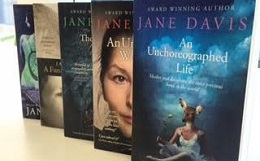
    Let me be totally upfront: I hate writing sex scenes. There are so many holes you can fall down. This article explains just some of them. And if a writer as experienced as Ben Okri can win the bad sex in fiction award, then what chance do I have? But An Unchoreographed Life tells the story of a ballerina who turns to prostitution when she becomes a single mother, so I do like to set myself challenges.

    In the case of These Fragile Things, I chose to write about near-death experience and religious visions. My sister’s advice was that no one but Graham Greene should attempt to write about religion, but it was the book I didn’t seem to be able to avoid writing. It was part of my DNA. My grandfather’s conversion to the Catholic faith shaped my father’s childhood and my own. It was important to me to tackle everything with sensitivity and I chose to have each character representing a distinct point of view, and each believing absolutely in his or her stand-point.

    Often, I have to step outside my own experience. I hope that by the time the need arises, I will know my character well enough that he or she can show me the way. In A Funeral for an Owl, I had my character Shamayal, a fourteen-year-old mixed race boy, face the gang members he’s desperately been trying to avoid. To find out how well I did writing my first fight scene, I had it analysed.

    Your novels are all very different – which readers like, but publishers are rather dubious about. Have you ever been asked to write something ‘similar’ to your award-winning debut?
    Readers often write to me wanting to know what happens next. They seem particularly interested in my secondary characters. With These Fragile Things, they fell in love with Miranda, my main character’s school-friend who is expelled for challenging her head mistress. With An Unchoreographed Life, readers already want to know more about Jean-Francois, one of Alison’s former dance partners. My philosophy is to ‘arrive late, get out early’. If I don’t leave the reader wanting more, I haven’t done my job.

    What’s the story behind your latest release?
    It’s the story of a radical poet and political activist called Lucy Forrester, who’s a cross between Edith Sitwell and Vivienne Westwood. Having been anti-establishment all of her life, she’s horrified to find that she’s been featured on the Queen’s New Year’s Honours list. To be honest, the idea of writing about the life of a poet came directly from reader reviews. Several comments that my prose was like poetry. I had no idea if I could actually write poetry but this gave me confidence that I might be able to convince readers that I could see the world as a poet does.

    How do you manage time within a novel that spans sixty years?Jane Davis author
    When I was writing I Stopped Time, I set up timelines for the twentieth century. I added everything from news stories to the books people were reading to the weather. Now, whenever I write a book, I grab the data from the decades it covers and slot my tailored research into place. For My Counterfeit Self, that included details from biographies of poets, literary critics, even a dress designer. Then, because I like cause and effect to show throughout the book, I tend to deconstruct the timeline. Memories don’t arrive in chronological order. They might show up like photographs or postcards, or sometimes even like unwelcome guests. This way, the reader builds a gradual picture of who the angry old lady we meet in the first chapter is, and what made her that way. The story comes together like a mosaic.

    You confess to loving biographies. How much has this influenced your fiction?
    The novel is such an ideal medium for ‘big subjects’ because it’s the only narrative form that transports the reader directly inside characters’ heads. By exploring an issue from the standpoint of one or two individuals, giving it context, providing motive, showing cause and effect, we humanise it. Biography also does that, but a biographer has a responsibility to his subjects in a way that a novelist doesn’t. I think it’s fair to say that you can be freer with the truth in fiction. At the same time, I want my fiction to feel real. I want readers to believe that Lucy Forrester exists!

    In the book, you talk about success coming at a price, as if another kind of bargain has been struck. Is this a reflection of how you feel about your experience of winning the Daily Mail First Novel Award?
    Obviously, it’s unavoidable for a writer to draw on their own experience. I received several reviews that suggested Half-truths and White Lies didn’t deserve to win, that the result was a fix, or that I must have been related to the judges. I wanted to say to those people, ‘I didn’t enter with any expectation of winning.’ You see, I entered out of sheer frustration. I had an agent but my manuscript had been sitting in her in-tray for six months.

    While I was writing My Counterfeit Self, I saw the reaction to Sarah Howes’ win of the TS Eliot Award for her debut collection, Loop of Jade. Even at the awards ceremony, a journalist overheard the comment, “I wonder how long it will be before everyone begins to hate her.” As it turned out, the answer was ‘Not Long’. Private Eye questioned the judging, asking if the award was given “for extra-poetic reasons?” Was it because she was a “young woman with a dual Anglo-Chinese heritage” and could be seen as “a more presentable ambassador for poetry than the distinguished grumpy old men she saw off”.

    There’s always a sense of giving with one hand and taking away with the other, ignoring the fact that at the centre of the controversy is someone vulnerable and real.

    My Counterfeit Self is an intriguing title. What does it mean to you?
    Lucy’s parents behave appallingly and in such a way that she is freed from any feeling of obligation to live up to their expectations. She moves out of the family home and decamps to bohemian Soho. In distancing herself from her parents she adopts a new personality that she hides behind. Although she insists that she lays herself bare in her poetry, it’s keeping secrets from those who love her most that is her undoing.

    My Counterfeit Self: from the award-winning author of Half-truths and White Lies, an emotional story of hidden identities, complicated passions and tangled truths.

    MORE ON MY COUNTERFEIT SELF

    A compelling portrayal of the bohemian life of an activist poet, the men she loves, and the issues she fights for. Eleanor Steele

    A rose garden. A woman with white hair. An embossed envelope from the palace.

    Lucy Forrester, for services to literature, you are nominated for a New Year’s Honour.

    Her hands shake. But it’s not excitement. It’s rage.

    For five decades, she’s performed angry poems, attacked government policy on everything from Suez to Trident, chained herself to embassy railings, marched, chanted and held placards high.

    Lucy knows who she is. Rebel, activist, word-wielder, thorn in the side of the establishment. Not a national bloody treasure.

    Whatever this is – a parting gesture, a final act of revenge, or the cruellest of jokes – it can only be the work of one man. Dominic Marchmont, outspoken literary critic and her on/off lover of fifty years, whose funeral begins in under an hour.

    Perhaps, suggests husband Ralph, the invitation isn’t the insult it seems? What if Dominic – the man they both loved – has left her an opportunity?

    ABOUT JANE
    Jane lives with her Formula 1 obsessed, beer-brewing partner, surrounded by growing piles of paperbacks, CDs and general chaos. When she is not writing, you may spot Jane disappearing up the side of a mountain with a camera in hand.

    START HERE

    Sign up to Jane’s newsletter for a free copy of I Stopped Time.
  • Ghost Stories and Shadows Online

    Ghost Stories and Shadows Online

    Firstly, thank you, all of you (1036 people – amazing!) who entered the recent Goodreads Giveaway for Shadows of the Lost Child, my most recent novel. Congratulations to the lucky winners, your book will be winging its way towards you soon; and commiserations to those who didn’t.

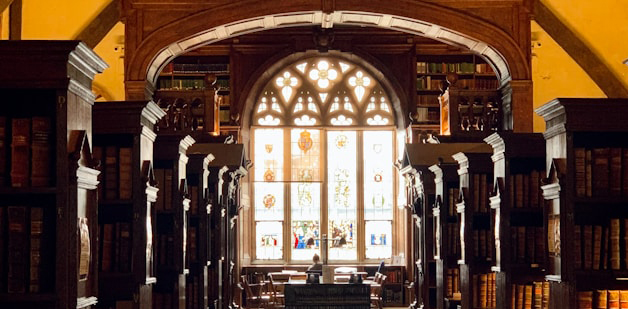
    But the good news is… the ebook version is now on SALE, and for a limited time, is Aleph's house in the novel Shadows of the Lost Childavailable at a reduced price: check it out here:

    http://tinyurl.com/qdolfd6 (UK) & http://tinyurl.com/ks3ksng (U. States)

    OR, via http://authl.it/B00NGSSVM2 (all countries).

    I hope you enjoy it. There’s a missing boot, and a mystery to solve and a girl called Alice who crosses time to meet a boy called Tom – and will there be a happy ending? You’ll just have to read it!

    In the meantime, here are two ghost stories – not unfortunately, with happy endings, but of interest, especially if you’ve been to Warwickshire. Don’t go alone!

    White Swan Hotel, Henley-in-Arden, 2010 by Alexander P. KappThe White Swan Hotel, Henley-in-Arden

    Henley-in-Arden, not that far from Stratford-upon-Avon, is a small town, with one main High Street. On this street is the White Swan Hotel; the present building dates from around 1600, but there’s thought to have been an inn on this site since the 14th century. At one time the site was apparently a stopping point on the stage coach route between Birmingham and London.

    The ghost was a woman called Virginia Black, who fell down the stairs, having quarrelled with a man in 1845. She may have been a ‘lady of the night’ and he may have been a client of hers. It’s said she roams the hotel’s corridor, lingering outside room 17…

    In case you should visit the inn yourself, she hasn’t been seen for some time!

    The inn was once the site of the local court, in the mid-late 19th century. The courtyard was used for public hangings, and a ghost was said to have lingered there for some years, after she was hung, for murder.

    Charlecote Park, 2013 by Karen.stepanyan (Wikimedia Commons)Charlecote Park

    Also not far from Stratford-upon-Avon, is Charlecote Park, now a National Trust property and open to visitors. The house itself is said to be haunted, but so is the lake, by the ghost of a woman, possibly a servant, who may have drowned herself there in the past.

    According to the story, her shadowy figure drifts from the house to the site of the lake, throws herself in, then disappears. Oddly enough, there’s never a splash, or ripples on the water.

    Shadows of the Lost Child (novel)

    Get your own ghosts and shadows to take home with an ebook version of Shadows of the Lost Child;  now on SALE until Saturday 28 February. Available from Amazon at:

    http://tinyurl.com/qdolfd6 (UK) & http://tinyurl.com/ks3ksng (U. States)

    Article written by Ellie Stevenson, author.

    This article is copyrighted material. Brief extracts including a link to this site can be quoted but the article must not be reproduced in full anywhere without the author’s written permission.

    Sources

    Images

  • Books and More: at the Indie Author Fair at the Chorleywood LitFest

    Books and More: at the Indie Author Fair at the Chorleywood LitFest

    Books at the Indie Author FairThe last few weeks have been so busy, this blog has taken a bit of a back seat. But at last, I can talk a bit about my book. And Chorleywood Lit Fest.

    Last weekend, I visited Chorleywood, not that I saw that much of the place, I was at the Indie Author Fair at the Chorleywood LitFest. Forty or so indie authors gathered together in a very small room, to share our work, with displays and readings, talking to readers, and also to each other. The room had a definite buzz, a life. At the end of the day we’d made new friends, and got to meet fellow ALLi* members, people we’d spoken to on Facebook or Twitter but never actually met in person. And a few we already knew.

    Indie Authors at the Indie Author Fair, Chorleywood Nov. 2014

    It was great fun, and here I’ve shared a few photos of the day. Of people and books. Because that’s what ALLi’s all about – helping each other, sharing professional expertise, and building a platform to showcase our work. The range of titles there was amazing, as was the enthusiasm – thanks ALLi, for being such a great professional network.

    Books at the Indie Author Fair

    And now to the book. My latest, partly historical novel, with a supernatural edge, is now out in print as well as in ebook. Shadows of the Lost Child - a novel and ghost storyIt’s set in a fictional city called Curdizan, in the present day, and also in the past, and centres on the story of a house. Which was once a school. In the present day, Aleph Jones, a troubled man with a dark secret he’s desperate to hide, is introduced to a girl called Alice, who won’t speak. Alice has a very special gift, she can cross time, and when she steps into the nineteenth century she meets a boy from the slums called Tom, and mystery, mayhem and death follow. There might even be a ghost or two in the story…

    But let Tom tell you his story himself.

    I should have been helping Miranda in the pub, but instead I went up to Curdizan High, to look for Louise. The High’s the part where the abbey is, as well as my school, although nothing about the place is high. I walked past the school and finally came to Pearson’s Tenements, that’s where she lives, but Louise wasn’t there, surprise, surprise. I wasn’t surprised, the place was a dump, but all the same, I had to look. The tenement building was tall and grim, tiny spaces joined by a stairway and open landings, the black of the open night in between. I thought they were more like rooms than landings, people’s possessions scattered about, rooms on the outside. I thought of escape.

    I once saw a woman jump from a landing, far too high from the ground to be safe, but almost worse, too low to be dead, and gone in a flash. They patched her up, as best as they could, and she even went back to her room for a bit, but she never walked the same after that and not long after, finally died. I didn’t know it at the time, but her name was May, and she was also Louise’s ma. I never did learn which room she came from.

    I shivered, scared in the black of the stairway, I knew I ought to go back, and soon. Miranda would be wondering where I was. But I’d promised old Pike I’d find Louise.

    ‘He’s Mister Pike,’ my ma would say, but she didn’t know Pike the way I knew him, he didn’t deserve to be called Mister. He was cold, indifferent and sometimes cruel; he’d said if I didn’t find Louise, he’d throw her out of the school for good, and she’d end up lost, like Miranda’s ma. I didn’t know what he meant by that, but I didn’t much like the way he’d said it, and I liked Louise, she wasn’t rough like most of the kids, and she lived in a flea pit, storeys high. If I had to live in Pearson’s Tenements, in amongst all the privy smells, I’m sure I’d forget to go to school. School would be just a dream or something.

    I reached a landing, the fourth or fifth, I didn’t know which, so I tossed a huge stone over the edge, and counted until I heard it land. Although I’d looked, I hadn’t found her. I’d even tried a few of the doors, but nobody seemed to know her name. A shadow slunk by and I held my breath, you’re never alone in a place like this. I turned around, got ready to run, but a hand shot out and grabbed my collar, pulling me back, very sharply. Somebody’s hand against my mouth. The somebody spoke.

    Shadows of the Lost Child, available on Amazon – a great present, or a treat for yourself, available in ebook, or in print.

    http://tinyurl.com/ks3ksng (US) and http://tinyurl.com/nbofbnv (UK)

    If you’ve read the book, or after you have, I’d love to hear your comments here. And as you may know from a previous post, the book was inspired by historic York, so if you’ve ever lived in York, or know the city, you might particularly enjoy the story.

    Article written by Ellie Stevenson, author.

    This article is copyrighted material. Brief extracts including a link to this site can be quoted but the article must not be reproduced in full anywhere without the author’s written permission.

    Want to share this post on Twitter? Here’s a suggested tweet for your timeline:

    ‘A hand shot out & grabbed my collar, pulling me back, very sharply. Then somebody spoke.’ #ShadowsoftheLostChild http://authl.it/B00NGSSVM2